
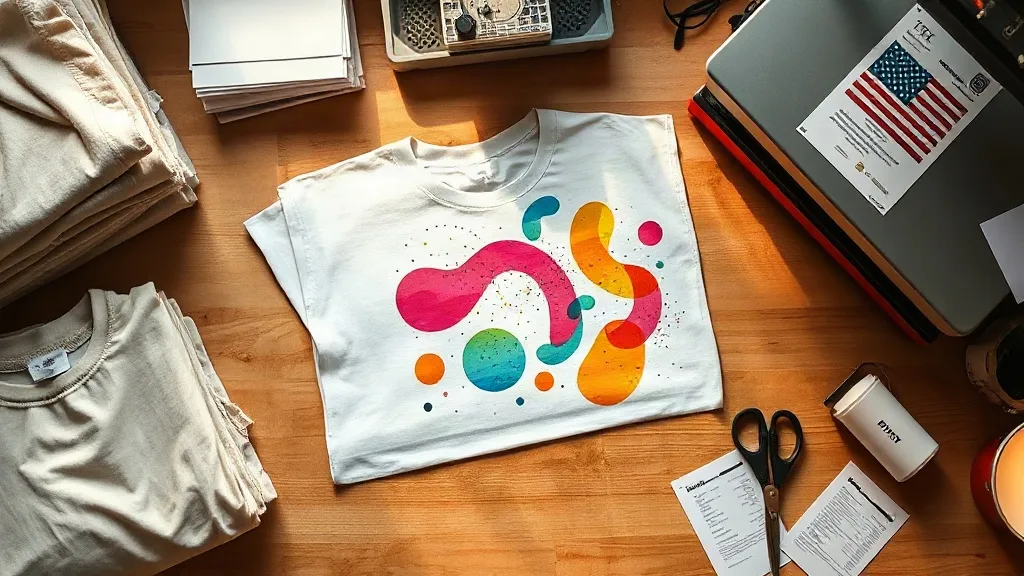
Most print shops lose money in the same boring places. Not on the press, not on the design work, but in the gap between a customer saying yes and a shirt leaving the door. Blanks that shrink after one wash, transfer sheets with more dead space than artwork, and press settings guessed from a YouTube comment instead of a spec sheet. This piece walks through one workflow that fixes a good chunk of that: pairing heavyweight shaka wear blanks with a DTF Gangsheet Builder to lay out and price transfers before a single drop of ink is spent.
It is written for the person running a two-press operation out of a garage, or the small shop taking twenty-shirt orders from local teams. If you have ever finished a gangsheet and realized you left a fist-sized gap in the corner, this is for you.
Why the blank matters as much as the print
A DTF transfer is only as good as the surface it lands on. Polyester blends can scorch or ghost under high heat. Thin cotton ripples and puckers, and the transfer follows every wrinkle. Heavier cotton, in the 6 to 7 ounce range, gives you a flat, stable surface that holds the adhesive film without creeping. That is the main reason shops keep coming back to shaka wear for their core blanks.
Shaka wear is built around heavyweight cotton tees, mostly in the 6.5 to 7 ounce territory depending on the style. The fabric is dense, the shoulders hold shape after a press, and the body does not collapse into a rag after three washes. For DTF work, that density matters twice over. First, the heat press sits flat against a stable surface, so the powder adhesive cures evenly. Second, a thicker knit absorbs the slight pressure of the press without leaving a shiny halo around the transfer edge.
What to check before you commit to a blank
- Weight: Anything under 5.5 oz will show press marks more readily. Aim for 6 oz or heavier for DTF.
- Shrinkage: Cotton blanks can shrink 5 to 8 percent on first wash. Order a size up if the customer is between sizes.
- Color fastness: Dark dyes can bleed under prolonged high heat. Test a scrap before committing a full run.
- Seam construction: Double-needle hems and taped neck seams survive the press better than single-stitch budget blanks.
None of this is exotic. It is just the difference between a shirt the customer wears twice and a shirt they wear for a year, and the second one brings repeat orders.
What a DTF Gangsheet Builder actually does
A DTF Gangsheet Builder is an online layout tool. You upload your artwork, it gives you a canvas sized to the film roll you buy (usually 22 or 24 inches wide by however long you want), and you drag designs onto the sheet until the space is filled. The tool then calculates the total sheet length and price before you order. No guessing at a print shop counter, no surprise invoice.
The practical value is not the software itself. It is what the software forces you to see: how much of your film you are actually using. A design that looks small on a monitor can occupy a surprising amount of a gangsheet once you account for cut gaps and registration marks. Seeing that visually, in advance, is the difference between a 60 percent yield and a 90 percent yield.
How the layout step usually goes
- Group the order by colorway. Front prints on one sheet, back prints on another, sleeve hits on a third if the volume justifies it.
- Upload each design at final print size. Do not upload a 3000px file and shrink it on the canvas; resample first so what you see matches what prints.
- Leave a consistent gap. Two to three millimeters between designs is enough for clean cutting without wasting film.
- Fill awkward gaps with small add-ons: pocket logos, sleeve tags, care label patches. Those are the pieces that otherwise become separate small orders.
- Check the total sheet length and price before ordering. If the sheet is half empty, either add more designs or split the order.
The tool also helps with repeat orders. Once you have a layout that works for a 40-shirt team order, you can reuse the same sheet configuration next season when the team reorders with a new roster. That is worth more than it sounds, because layout time is the silent cost in small-batch apparel.
Building a workflow that holds up on a busy week
The mistake most shops make is treating the gangsheet as a separate task from the pressing. They are the same task, split in time. If the gangsheet is laid out without thinking about how the transfers will be pressed, you end up with a sheet that is technically efficient but operationally awkward. Here is a sequence that works.
Step 1: Lock the blank order first
Order the shaka wear blanks before you finalize the gangsheet. Sizes and colors drive the transfer count, and a late substitution from a 7 oz heavyweight to a 5.5 oz budget tee changes your press settings. Knowing the actual blank means you can set the press once and leave it.
Step 2: Lay out the gangsheet against the blank count
If the order is 24 mediums, 18 larges and 6 extra larges, the gangsheet should reflect those numbers. Build sheets per size band if the artwork is size-specific, or one combined sheet if the design is identical across sizes. The DTF Gangsheet Builder makes this easy because you can duplicate a design across the canvas in seconds, so a 48-piece run takes minutes to lay out rather than an afternoon.
Step 3: Press settings for heavyweight cotton
Typical starting point for a 6.5 oz cotton tee with a DTF transfer: 320 to 340 degrees Fahrenheit, medium pressure, 10 to 15 seconds peel-hot or peel-cold depending on the film. Follow the film manufacturer's spec, not a general rule, because adhesive chemistry varies. Press a test shirt from the actual blank batch before you run the full order. Dark colors sometimes need a slightly longer dwell to fully cure the powder, and you will see that in the test peel, not on the invoice.
Step 4: Cool, peel, re-press
Peel the carrier film once the transfer is cool enough to handle, then re-press for 5 seconds under a cover sheet. That second press is what most shops skip, and it is the step that locks the edges down so the transfer survives the first wash. On heavier shaka wear blanks, the re-press also flattens any slight texture lift from the knit.
Where the cost savings actually come from
Shops often assume the savings live in the ink or the film. In practice, they live in three places:
- Film yield: A tight gangsheet uses 15 to 30 percent less film than a loosely laid-out one on the same job.
- Labor: One sheet that covers 40 shirts is one cut-and-press session, not four. That is hours back per week.
- Rework: Fewer mis-pressed transfers means fewer replacement shirts, and replacements are the most expensive shirt you will ever make.
None of these show up as a line item, which is why they get ignored. Track them for a month and the pattern becomes obvious.
Common mistakes worth avoiding
After enough orders, the same handful of problems keep surfacing. A few to watch for:
- Uploading artwork with a white background instead of transparent. The builder will print the background as a solid block.
- Ignoring the design's own bleed. Fine hairlines at the edge of artwork can drop out during the cut.
- Mixing film types on one sheet. Different adhesives cure differently and you will not get a clean press.
- Skipping the pre-press of the blank. A five-second pre-press removes moisture and wrinkles and makes a real difference on heavyweight cotton.
- Ordering the gangsheet before confirming the blank size. A late size swap can leave you with transfers that no longer match the run.
Frequently asked questions
Does shaka wear work well with DTF transfers?
Yes, and the heavyweight cotton is one of the reasons. The dense knit gives the transfer a stable surface, holds its shape through the press, and resists the puckering that thinner blanks show under heat. Test a scrap from your batch first, as dye lots can vary.
How do I know if my gangsheet is actually saving money?
Compare the sheet length you order to the total area of the designs on it. If you are using less than 70 percent of the sheet, you are paying for empty film. The DTF Gangsheet Builder shows this visually, so you can adjust before checkout rather than after.
Can I mix different designs on one gangsheet?
Yes. That is the point of a gangsheet. The only rule is to keep film type consistent across the sheet, since mixing adhesives on one sheet complicates the press settings and the peel timing.
What temperature should I press DTF on heavyweight cotton?
Start at 320 to 340 degrees Fahrenheit with medium pressure, and follow the film manufacturer's spec. Press a test shirt from the actual blank batch before the full run, because the correct setting depends on both the film and the fabric weight.
How long does a DTF transfer last on a heavyweight tee?
With a proper press and a cold peel followed by a short re-press, a DTF transfer on a quality heavyweight cotton blank typically holds up through many wash cycles. Wash inside out in cold water and avoid high dryer heat to extend the life further.