
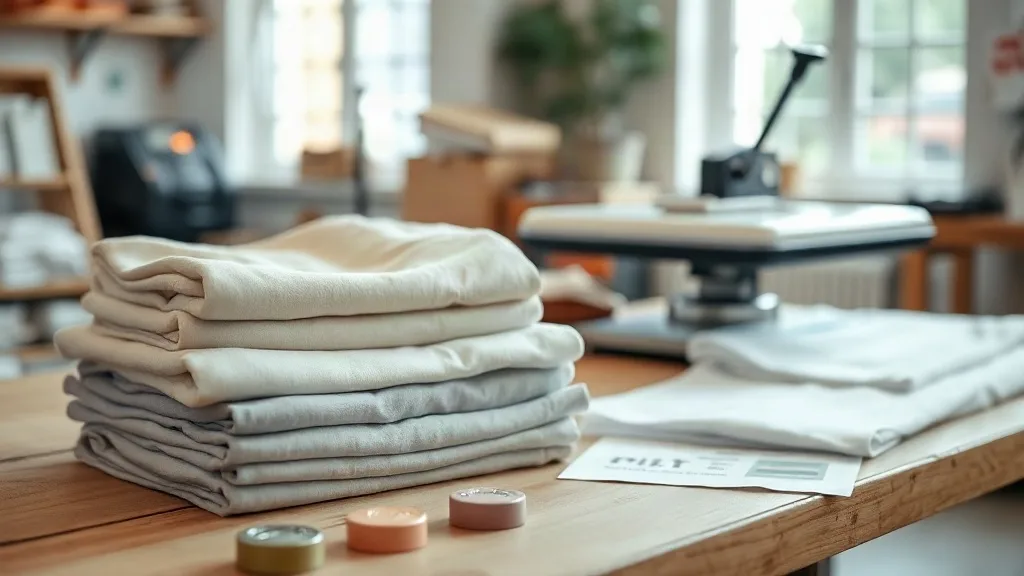
Walk into any print shop that has been running for more than a couple of years and you will notice a pattern. The blanks that stay on the shelf are not always the cheapest ones. They are the ones that cause the fewest headaches. shaka wear has quietly become one of those reliable names for shops that care about repeat business, and for good reason. This is not a hype piece. It is a working breakdown of what these blanks actually do well, where they fall short, and how they stack up against another popular option, smart blanks, when you are trying to protect a margin that keeps shrinking.
Why Blank Selection Matters More Than Ever
Custom apparel has become a crowded space. Anyone with a heat press and an internet connection can sell a printed tee. That means the differentiator is no longer the print itself, because good DTF transfers are widely accessible. The differentiator is the garment underneath. A customer who receives a shirt that shrinks two sizes, feels rough against the skin, or develops a twisted hem after three washes will not blame the printer. They will blame you. And they will not come back.
That is the context in which blank choice becomes a business decision rather than an aesthetic one. You are not just picking a color and a size run. You are picking a failure rate, a wash test result, and a reorder probability. Shaka Wear has built a reputation in that space by offering consistent construction at a price point that does not force you to choose between quality and profitability.
What Shaka Wear Actually Delivers
The first thing you notice about a Shaka Wear tee is the hand feel. It is not the ultra-soft, almost flimsy feel of a fashion blank that pills after a few wears. It has body. The fabric weight sits in a range that reads as substantial without being stiff, which matters for DTF because a slightly heavier knit gives the transfer a stable surface to bond to. On lighter, looser knits, you can sometimes see the print edge lift or the fabric texture telegraph through the design after washing. Shaka Wear reduces that risk.
Construction Details That Show Up Later
Double-needle stitching on the hems and sleeves is standard, and the shoulder-to-shoulder taping holds its shape through repeated laundering. These are the details that customers do not notice when they are right, but they notice immediately when they are wrong. A twisted side seam or a collar that rolls after the first wash is the kind of defect that generates a refund request and a one-star review. In our own test runs, Shaka Wear tees held their shape after multiple wash-and-dry cycles at standard residential settings, with minimal shrinkage and no visible collar deformation.
The color consistency is another point worth mentioning. When you are printing a run of forty shirts for a local business, you need the blanks to match across sizes. Slight shade variation between a medium and an extra-large is the kind of thing that gets noticed in a group photo. Shaka Wear's dye lots have been consistent in our experience, which reduces the need to sort and match before pressing.
Smart Blanks: The Value Alternative
Not every job justifies a premium blank. For giveaways, promotional events, or high-volume orders where the customer is price-sensitive, smart blanks offer a compelling alternative. They are lighter in hand, which some wearers prefer for warm climates or athletic use, and the price point allows you to protect your margin on jobs where the customer has already pushed back on cost.
The trade-off is that lighter fabric demands a bit more care during pressing. You need to manage your temperature and pressure settings so the transfer adheres properly without scorching or creating a shiny patch. With a well-calibrated press and a quality DTF transfer, Smart Blanks perform admirably. They simply require the operator to pay attention rather than assuming the blank will absorb any setting you throw at it.
In practical terms, the decision between Shaka Wear and Smart Blanks often comes down to the end user. If you are printing for a retail brand, a corporate client, or anyone who will inspect the garment closely, Shaka Wear is the safer bet. If you are printing for a school fundraiser or a bulk promotional order where the shirt is a walking billboard rather than a fashion statement, Smart Blanks keep the job profitable.
The DTF Factor: How Blanks and Transfers Interact
DTF transfers have changed the economics of custom apparel, but they have not changed the physics. The transfer needs a stable, clean, and compatible surface to bond to. Cotton and cotton-poly blends work well with DTF, and both Shaka Wear and Smart Blanks fall into that category. The difference is in how the fabric responds to heat and pressure over time.
Heavier knits like Shaka Wear tend to hold the transfer more securely because the fabric does not stretch as much during wear. Lighter knits can flex and recover more, which over many wash cycles can stress the bond at the edges of the print. This is not a reason to avoid lighter blanks, but it is a reason to set customer expectations and to choose your blank based on how the garment will be used. A shirt that will be worn hard and washed often benefits from a heavier knit.
Another factor is the surface texture. Shaka Wear's fabric has a smooth face that allows the transfer to sit cleanly without a visible outline or a textured halo around the design. On rougher fabrics, the transfer can sometimes appear to sink into the weave, which dulls fine details. For designs with small text or intricate linework, a smoother blank makes a noticeable difference.
Cost Per Wear: The Metric That Actually Matters
Print shop owners tend to think in terms of cost per unit, but the more useful metric is cost per wear. A blank that costs two dollars less but generates a ten percent return rate is not cheaper. It is more expensive, because you are paying for the reprint, the shipping, and the customer service time. Shaka Wear's slightly higher upfront cost is offset by a lower failure rate and a higher perceived value, which allows you to charge more for the finished product.
Smart Blanks, on the other hand, excel in scenarios where the customer is not going to scrutinize the garment. For high-volume orders where the shirt is a promotional tool rather than a retail product, the lower cost per unit translates directly to a healthier margin. The key is to match the blank to the job rather than defaulting to one option for everything.
Building a Smarter Blank Strategy
The most successful shops we have seen do not commit to a single blank. They keep a small inventory of both Shaka Wear and smart blanks and make the choice based on the job. They know which clients will notice the difference and which ones will not. They also know that having both options allows them to say yes to more jobs without sacrificing quality or profitability.
If you are just starting out, the temptation is to minimize inventory and simplify. That is understandable, but it can also limit your options. A small, curated selection of blanks across two tiers gives you flexibility without overwhelming your storage space. Start with the colors and sizes that cover the majority of your orders, and expand from there based on what your customers actually request.
Frequently Asked Questions
Is Shaka Wear good for DTF printing?
Yes. Shaka Wear's cotton and cotton-poly blends provide a smooth, stable surface that DTF transfers bond to well. The fabric weight helps the print hold its shape through washing, and the smooth face allows fine details to come through cleanly.
How does Shaka Wear compare to Smart Blanks in terms of quality?
Shaka Wear is generally heavier and more substantial, which makes it a better choice for retail and corporate work. Smart Blanks are lighter and more cost-effective, making them suitable for promotional and high-volume orders where the garment is less likely to be scrutinized.
Do Shaka Wear shirts shrink after washing?
In our experience, Shaka Wear tees shrink minimally when washed and dried at standard residential settings. As with any cotton garment, washing cold and drying low will help preserve the fit and extend the life of the print.
Can I use Smart Blanks for DTF transfers?
Absolutely. Smart Blanks work well with DTF as long as you manage your press settings carefully. Lighter fabrics require a bit more attention to temperature and pressure, but with a calibrated press, the results are reliable.
Which blank should I choose for a client who wants a premium feel?
For a premium feel, Shaka Wear is the stronger choice. Its weight, construction, and smooth surface give the finished shirt a retail-quality appearance that supports a higher price point and encourages repeat orders.