
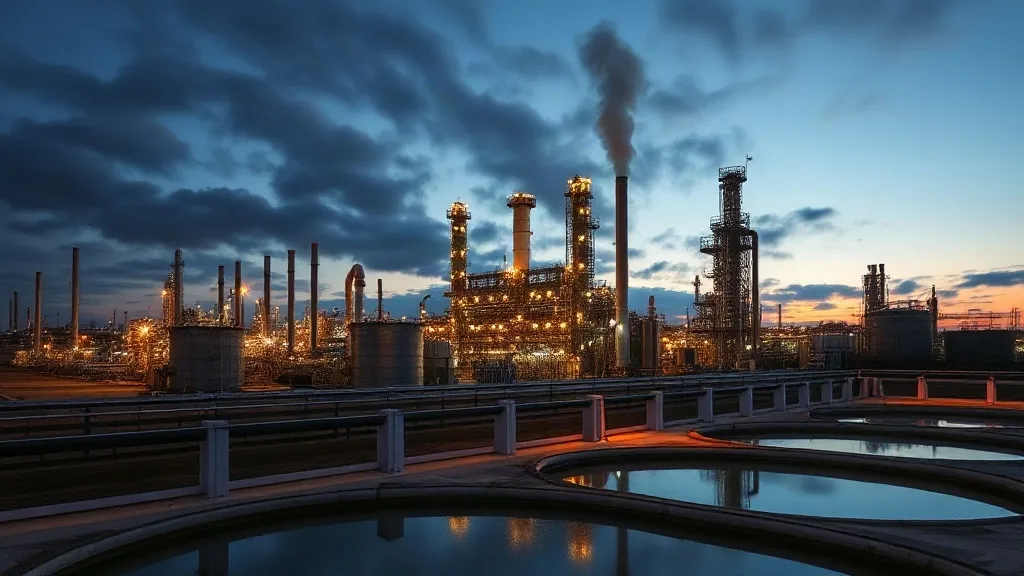
Kemira, the Helsinki-based chemicals company specializing in water treatment and pulp and paper chemistry, released its third-quarter 2026 results this morning, and the headline numbers tell a familiar story for the industrial sector: top-line growth is intact, but profitability is under siege from persistent cost inflation. Revenue for the quarter came in at €812 million, up 5.3% year-on-year, yet operating profit slipped 4.1% to €98 million, and the operating margin contracted to 12.1% from 13.3% a year earlier. The market reaction was muted, with shares ending the day down 1.2% in a flat Helsinki exchange.
The results underscore the challenge facing chemical companies as they navigate a landscape of volatile raw material prices, energy costs, and freight expenses. While Kemira has successfully passed on some costs through price increases, the lag between cost increases and price adjustments continues to weigh on margins. In this analysis, we dig into the segment details, management commentary, and what the numbers signal for the rest of the year and beyond.
Revenue Growth Driven by Pricing and Volume
Kemira's revenue increase was primarily attributed to higher selling prices across both segments, with a modest contribution from volumes. The company reported that price increases accounted for approximately 4% of the growth, while volumes added 1.3%. Currency effects were negligible. This marks the sixth consecutive quarter of year-on-year revenue growth, a testament to the essential nature of Kemira's products and its ability to maintain pricing power in a competitive market.
However, the volume growth of just 1.3% suggests that demand is not accelerating; it is steady but not robust. The pulp and paper segment saw volumes decline slightly, reflecting a soft market for paper products in Europe, while the water treatment segment delivered mid-single-digit volume growth, driven by municipal and industrial demand for clean water solutions.
Margin Pressure from Cost Inflation
The story on the bottom line is less rosy. Cost inflation remained the primary headwind, with increases in raw materials, energy, and logistics. The company noted that raw material costs were up 8% year-on-year, with particular pressure from caustic soda and sulfuric acid, key inputs for water treatment chemicals. Energy costs, while off their 2022 peaks, were still 15% higher than the same quarter in 2025. Freight and logistics costs also rose due to higher fuel prices and supply chain disruptions in the Red Sea region.
These cost increases were partially offset by efficiency measures and price hikes, but the net effect was a 120 basis point decline in the operating margin. Management highlighted that the lag between cost increases and price adjustments is typically one to two quarters, and they expect margin recovery in the fourth quarter as recent price increases take full effect.
Segment Performance: Water Treatment Shines, Pulp & Paper Lags
Kemira operates two main segments: Water Treatment and Pulp & Paper. In Q3, Water Treatment revenue grew 7.2% to €462 million, with operating profit up 3.5% to €62 million. The segment benefited from strong demand for coagulants and flocculants in municipal water treatment projects in Europe and North America, as well as industrial water reuse initiatives. The operating margin for Water Treatment was 13.4%, down from 14.1% due to higher input costs but still healthy.
Pulp & Paper revenue increased 2.8% to €350 million, but operating profit fell 12.5% to €36 million, dragging the segment's margin down to 10.3% from 11.9%. The segment faced softer demand for paper chemicals in Europe, where paper mills have been reducing production due to high energy costs and weak demand for printing and writing paper. However, the packaging and board sub-segment showed resilience, with volume growth in line with GDP.
Management noted that the Pulp & Paper segment is more cyclical and exposed to the health of the European paper industry, which is currently facing structural challenges. They are focusing on expanding into new applications such as bio-based materials and specialty coatings to diversify revenue streams.
Regional Breakdown: Europe Flat, Americas Grow
From a geographic perspective, Europe accounted for 45% of revenue and was essentially flat year-on-year, as economic stagnation in Germany and France offset growth in Northern Europe. North America saw revenue growth of 8.5%, driven by strong demand for water treatment chemicals and price increases. South America grew 12.3%, albeit from a smaller base, while Asia-Pacific grew 6.7%, with China showing signs of stabilization after a weak first half.
The company's exposure to Europe remains a concern for analysts, as the region grapples with high energy costs and weak industrial production. However, Kemira's water treatment business is less cyclical and provides a stabilizing effect.
Management Outlook and Strategic Initiatives
CEO Jari Rosendal, in his comments, acknowledged the margin pressure but remained optimistic about the future. "We continue to see strong demand for our water treatment solutions, and our pricing actions are gaining traction," he said. "While cost inflation remains a challenge, we are confident in our ability to recover margins through operational efficiency and disciplined pricing."
The company reiterated its full-year 2026 guidance, expecting revenue growth of 4-6% and an operating margin of 12-13%. For Q4, they anticipate margin improvement as price increases catch up with costs. They also highlighted ongoing investments in capacity expansion for water treatment chemicals in the US and Asia, which should support growth in 2027.
Analysts on the call pressed management on the sustainability of pricing in a potentially weakening economic environment. Rosendal emphasized that Kemira's products are essential and that the company has been able to maintain prices even in downturns. However, he acknowledged that further price increases may be harder to implement if demand softens.
Industry Context: Chemical Sector Faces Headwinds
Kemira's results are emblematic of the broader chemical industry's struggle with cost inflation. According to the European Chemical Industry Council (Cefic), production in the EU chemical sector declined by 2.5% in the first eight months of 2026 compared to the same period last year, with margins squeezed by high energy costs. The industry has been vocal about the need for supportive policies to ensure competitiveness.
In this environment, Kemira's focus on water treatment, a less cyclical and growing market, provides some insulation. The global water treatment market is expected to grow at a CAGR of 6% through 2030, driven by tightening regulations and increasing water scarcity. Kemira is well-positioned to capitalize on this trend, with a strong portfolio of products and a global footprint.
What to Watch in Q4 and Beyond
Investors will be closely watching several factors in the coming months. First, the trajectory of raw material costs, particularly for caustic soda and sulfuric acid, which are key inputs. Any further increases could delay margin recovery. Second, the effectiveness of price increases in the fourth quarter. Third, volume trends in the pulp and paper segment, which is sensitive to the health of the European economy. Finally, the company's ability to execute on its growth investments and maintain its dividend, which currently yields around 4%.
Kemira's Q3 results reflect a company navigating a tough environment but with a resilient business model. The revenue growth is commendable, but the margin pressure is a reminder that cost inflation is not yet tamed. The coming quarters will reveal whether Kemira can restore its margins while continuing to grow.
Frequently Asked Questions
What were Kemira's Q3 2026 revenue and profit figures?
Kemira reported revenue of €812 million, up 5.3% year-on-year, and operating profit of €98 million, down 4.1%. The operating margin was 12.1%, compared to 13.3% in Q3 2025.
Why did Kemira's margins decline despite revenue growth?
Margins were squeezed by cost inflation, particularly in raw materials (up 8%), energy (up 15%), and logistics. While price increases contributed to revenue growth, they lagged behind cost increases, leading to a 120 basis point contraction in the operating margin.
How did Kemira's segments perform in Q3 2026?
The Water Treatment segment grew revenue by 7.2% to €462 million with an operating margin of 13.4%, while the Pulp & Paper segment grew revenue by 2.8% to €350 million but saw its operating margin fall to 10.3% due to softer demand and higher costs.
What is Kemira's outlook for the rest of 2026?
Kemira reiterated its full-year guidance of 4-6% revenue growth and a 12-13% operating margin. Management expects margin improvement in Q4 as price increases catch up with costs.
How is Kemira addressing cost inflation?
Kemira is implementing price increases, driving operational efficiencies, and investing in capacity expansions for water treatment chemicals to support long-term growth. The company is also focusing on less cyclical segments like water treatment to stabilize performance.