
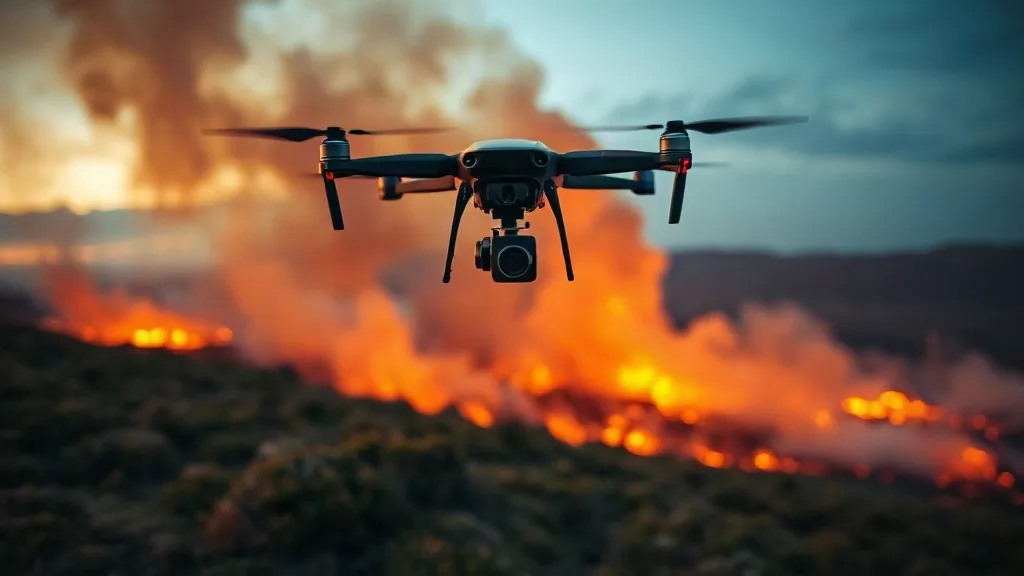
After a summer that rewrote temperature records and left landscapes tinder-dry, the UK government is turning to artificial intelligence to sharpen its response to wildfires. The plan, announced at England's first wildfire summit, is to establish a dedicated Wildfires AI Unit within the National Situation Centre, the government's crisis management hub. The unit's mission is straightforward but ambitious: spot fires sooner and fight them faster.
The urgency is hard to overstate. Last summer's unprecedented heat created conditions that made wildfires more likely and more intense across the country. While the UK has not traditionally been a wildfire hotspot, the changing climate is shifting that reality. The new unit represents a bet that technology can help close the gap between detection and response, potentially saving lives, property, and vast areas of natural habitat.
Why AI for Wildfires?
Wildfires are unpredictable and fast-moving. Every minute between ignition and response matters. Traditional detection methods often rely on human observation, emergency calls, and satellite data that may not be timely enough. AI offers the ability to process vast amounts of data from multiple sources, including satellite imagery, weather stations, and ground sensors, to identify anomalies that might indicate a fire.
Machine learning models can be trained to recognize patterns associated with fire outbreaks, such as smoke plumes or sudden temperature spikes, and alert authorities in near real-time. This could allow firefighters to reach a blaze while it is still small, rather than after it has spread. The Wildfires AI Unit is expected to develop and deploy such systems, integrating them into the national emergency response framework.
How It Fits into the National Situation Centre
The National Situation Centre already serves as a coordination hub for crises ranging from flooding to pandemics. Placing the AI unit there makes sense: it can tap into existing data streams and communication channels, ensuring that wildfire detection is not a standalone effort but part of a broader situational awareness picture. The centre's role in bringing together different agencies means the AI unit can work with meteorologists, fire services, and local authorities to turn alerts into action.
The Broader Context: A Record-Breaking Summer
The announcement comes after the UK experienced its hottest summer on record. That summer brought not only discomfort but also a stark warning about the future. Heatwaves dry out vegetation, creating fuel for fires. In the UK, areas like moorlands and heathlands are particularly vulnerable, and fires in these environments can be especially difficult to access and control.
While the source report does not provide specific figures on wildfire frequency or damage, it is clear that the government views the threat as significant enough to warrant a dedicated AI response. The move aligns with a growing global trend of using technology to mitigate natural disasters. From California to Australia, AI is being tested for early fire detection, and the UK's initiative is part of that wave.
What the Unit Will Do
According to the available information, the Wildfires AI Unit will focus on spotting and fighting fires faster. While the exact technical details are not yet public, we can infer from similar initiatives that the unit might employ:
- Satellite and aerial imagery analysis: AI can scan images for signs of smoke or fire, even in remote areas.
- Sensor networks: Ground-based sensors can detect changes in temperature, humidity, and smoke concentration.
- Predictive modelling: Machine learning can forecast where fires are most likely to start based on weather, vegetation, and historical data.
- Resource allocation: AI can help optimize the deployment of firefighting resources, ensuring that crews and equipment are sent where they are needed most.
These capabilities are not just theoretical; they are being developed and tested in various parts of the world. The UK unit will likely adapt and refine them for local conditions.
Challenges and Considerations
AI is not a silver bullet. For the unit to be effective, it will need reliable data, robust infrastructure, and seamless integration with existing emergency services. False positives could waste valuable resources, while false negatives could be catastrophic. The unit will need to strike a balance between sensitivity and specificity.
Privacy and data governance are also concerns. The use of drones and cameras for fire detection must be balanced with public trust. The government will need to ensure that data collection is transparent and lawful.
Moreover, technology alone cannot solve the wildfire problem. Prevention, land management, and public education remain critical. The AI unit should be seen as a tool to enhance, not replace, these efforts.
The Global Race for Wildfire Tech
The UK's move is part of a larger international effort. In the United States, agencies like NASA and FEMA are using AI to predict fire behavior and allocate resources. Australia has trialed AI-powered cameras to detect bushfires early. The European Union is funding research into AI for disaster response. By establishing its own unit, the UK positions itself within this global network, potentially sharing insights and collaborating on solutions.
However, the UK's context is unique. Its landscapes and climate differ from those of California or Australia, so off-the-shelf solutions may not work. The unit will need to develop tailored approaches, learning from both successes and failures elsewhere.
Funding and Timeline
The source material does not specify the budget or timeline for the Wildfires AI Unit. However, such initiatives typically require significant investment in technology, personnel, and infrastructure. The government's commitment will be tested by how quickly it can deliver tangible results. The unit's placement within the National Situation Centre suggests it will be operational in some capacity soon, but the full scope of its capabilities may take years to realize.
Public and Political Reaction
While the announcement has not yet generated widespread public debate, it is likely to be welcomed by environmental groups and fire services. The use of AI for public safety is generally seen as positive, provided it is implemented responsibly. Some may question whether the focus on technology detracts from the need for climate action, but the government frames the unit as a necessary adaptation measure.
Prime Minister Andy Burnham, who announced the plan, has positioned it as a forward-looking step. In a statement, he emphasized the importance of using innovation to protect communities. The summit itself, the first of its kind in England, signals a growing recognition that wildfires are no longer a distant threat.
What This Means for the Future
The Wildfires AI Unit could mark a turning point in how the UK manages natural disasters. If successful, it could serve as a model for other countries and for other types of emergencies. The integration of AI into crisis response is still in its early days, but the potential is immense.
For now, the details are sparse, but the direction is clear. The UK is betting on technology to help it adapt to a hotter, drier future. Whether that bet pays off will depend on execution, collaboration, and continued investment.
Frequently Asked Questions
What is the Wildfires AI Unit?
The Wildfires AI Unit is a new government initiative to use artificial intelligence to detect and respond to wildfires more quickly. It will be part of the National Situation Centre and was announced at England's first wildfire summit.
Why is the UK setting up this unit now?
The UK experienced its hottest summer on record, which increased the risk of wildfires. The government aims to improve its ability to spot and fight fires faster, protecting lives and landscapes.
How will AI help fight wildfires?
AI can analyze satellite imagery, sensor data, and weather patterns to detect fires early and predict their spread. This allows fire services to respond more rapidly and allocate resources efficiently.
Will the unit replace human firefighters?
No, the unit is intended to support human decision-making and enhance existing firefighting efforts. It will provide early warnings and data-driven insights, but firefighters will remain essential.
Is this part of a larger trend?
Yes, many countries are exploring AI for wildfire management. The UK's initiative aligns with global efforts to use technology to mitigate natural disasters.