
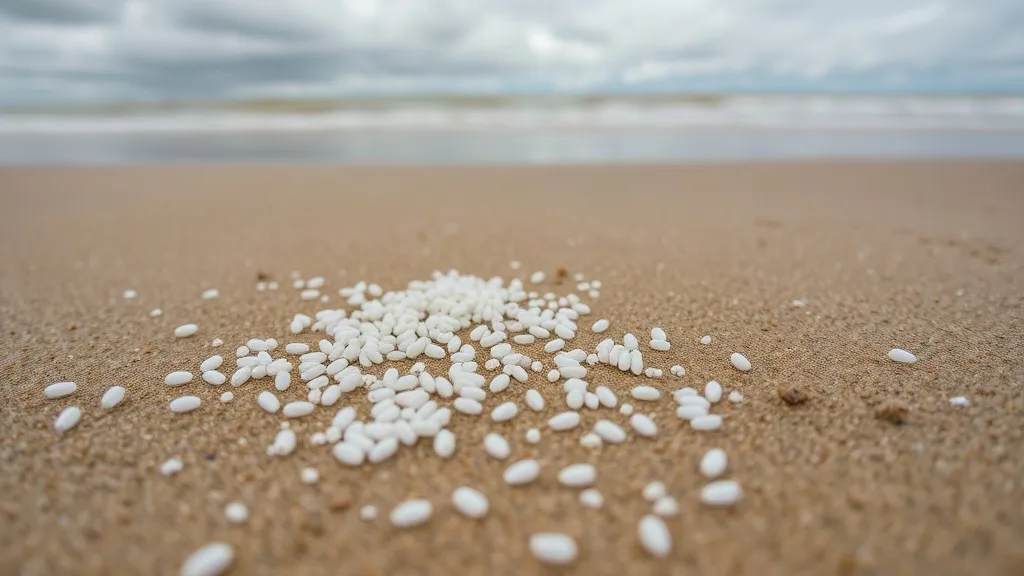
When tiny plastic pellets started washing up on Danish beaches earlier this year, researchers and locals alike wondered where they came from. Now, Denmark's Environment Protection Agency says the nurdles it has tested are similar to those from a spill in the River Tyne in England, hinting at a possible connection between the two pollution events. The finding, though not yet definitive, raises unsettling questions about how far plastic pollution can travel and how little we know about its pathways.
What Are Nurdles and Why Do They Matter?
Nurdles are small plastic pellets, typically around 5mm in diameter, that serve as the raw material for making plastic products. They are melted down and molded into everything from water bottles to car parts. Because they are so small and lightweight, they are easily lost during transport or handling, and once in the environment, they are nearly impossible to clean up. Nurdles can persist for decades, fragmenting into microplastics and attracting toxic chemicals like PCBs and DDT. Marine animals often mistake them for food, leading to ingestion and potential harm.
The scale of the problem is staggering. A single container spill can release billions of nurdles into the sea. One of the most well-known incidents occurred in 2021 when the cargo ship X-Press Pearl caught fire and sank off the coast of Sri Lanka, spilling an estimated 1,680 tonnes of nurdles. In Europe, a spill in the River Tyne in 2021 released millions of pellets into the North Sea. Now, the Danish agency's findings suggest that those pellets may have traveled across the sea to Denmark's shores.
The Danish Findings: A Match or a Coincidence?
According to the Danish Environment Protection Agency, the nurdles it tested are similar in composition to those from the Tyne spill. The agency has not yet confirmed a direct link, but the similarity is striking enough to warrant further investigation. The pellets were found during routine monitoring of Danish beaches, and initial analysis suggests they are made of the same type of plastic and have similar characteristics.
Dr. Henrik Jensen, a marine pollution expert at Aarhus University, says the finding is plausible. "Nurdles are buoyant and can drift with ocean currents for thousands of kilometers," he explains. "Once they enter the sea, they can be carried by prevailing winds and currents, and it's entirely possible for pellets from the UK to end up in Danish waters." Jensen adds that the North Sea is a semi-enclosed body of water with complex circulation patterns, which can concentrate debris in certain areas.
However, not everyone is convinced. Dr. Sarah Mitchell, a plastic pollution researcher at the University of Plymouth, points out that nurdles are produced in many factories across Europe and are often identical in appearance. "Without a unique chemical fingerprint or a direct tracer, it's difficult to definitively link pellets to a specific spill," she says. "The Danish agency's conclusion is cautious, and that's appropriate."
The Tyne Spill: A Case Study in Plastic Pollution
The River Tyne spill occurred in 2021 when a container ship lost cargo during a storm, releasing millions of nurdles into the river. The pellets washed up along the northeast coast of England, prompting cleanup efforts and raising awareness about the issue. The spill was significant because it highlighted the lack of regulation around nurdle transport and the difficulty of containing such spills.
Since then, volunteers and environmental groups have been monitoring the area, and some pellets are still being found. The spill also led to calls for stricter international rules on the handling and transport of plastic pellets. In 2022, the International Maritime Organization (IMO) adopted voluntary guidelines for the carriage of plastic pellets in freight containers, but campaigners argue that mandatory measures are needed.
How Do Nurdles Travel Across the Sea?
Nurdles are lightweight and float, so they are easily carried by currents and winds. In the North Sea, the dominant currents flow counterclockwise, moving water from the English Channel up along the Dutch and German coasts and then towards Denmark and Norway. This means that debris from the UK can indeed reach Denmark, although the journey may take months or even years.
Once in the water, nurdles can be transported by surface currents, but they can also sink if they become colonized by marine organisms or if they aggregate with other particles. Some may wash up on beaches, while others may be ingested by fish or seabirds. The Danish agency's findings suggest that at least some of the pellets from the Tyne spill have made their way to Denmark, but the exact pathway is still unclear.
What Are the Environmental Impacts?
The environmental impact of nurdles is twofold: physical and chemical. Physically, they can cause blockages in the digestive systems of animals that mistake them for food. Chemically, they can absorb and concentrate pollutants from the surrounding water, such as heavy metals and persistent organic pollutants (POPs). When ingested, these toxins can leach into the animal's tissues, potentially causing harm.
Studies have shown that nurdles can be ingested by a wide range of marine species, from plankton to seabirds. A 2021 study found that 90% of seabirds have ingested plastic, and nurdles are a significant component of that. In Denmark, researchers have found nurdles in the stomachs of fish and seabirds, although the extent of the problem is not fully known.
The Danish Environment Protection Agency's findings are a reminder that plastic pollution is a transboundary issue. "This is not just a local problem," says Jensen. "What happens in one country can affect another, and we need international cooperation to address it."
What Is Being Done to Tackle Nurdle Pollution?
Efforts to tackle nurdle pollution are gaining momentum. At the international level, the IMO's voluntary guidelines are a start, but many NGOs are pushing for a binding agreement. The United Nations Environment Programme (UNEP) has also highlighted nurdles as a priority pollutant. In Europe, the EU is working on a revision of its Port Reception Facilities Directive, which could include measures to prevent pellet loss.
At the national level, countries like Denmark and the UK have implemented monitoring programs and cleanup initiatives. In Denmark, the Environment Protection Agency has been conducting regular beach surveys to track nurdle pollution. The agency's recent findings will feed into a broader assessment of plastic pollution in Danish waters.
Industry-led initiatives, such as Operation Clean Sweep, aim to reduce pellet loss from factories and supply chains. However, participation is voluntary, and critics argue that it has not been effective enough. "We need mandatory measures, not just voluntary ones," says Mitchell. "The scale of the problem requires a regulatory response."
The Bigger Picture: Plastic Pollution in the North Sea
The North Sea is one of the most industrialized seas in the world, and it is heavily impacted by plastic pollution. Nurdles are just one part of the problem. Every year, an estimated 8 million tonnes of plastic enter the ocean, and the North Sea is a hotspot for marine litter. The Danish agency's findings are a small piece of a much larger puzzle.
Reducing plastic pollution requires a combination of measures: better waste management, improved product design, and international cooperation. For nurdles specifically, the key is to prevent spills during transport and handling. This can be achieved through better packaging, stricter regulations, and improved monitoring.
As for the Danish nurdles, further tests are needed to confirm their origin. The Danish Environment Protection Agency has said it will continue to investigate and will collaborate with international partners. In the meantime, the incident serves as a stark reminder of how interconnected our oceans are and how quickly plastic pollution can spread.
Frequently Asked Questions
What are nurdles and where do they come from?
Nurdles are small plastic pellets used as raw material in the plastics industry. They are typically made from polyethylene, polypropylene, or polystyrene and are produced in petrochemical plants. They are then shipped to manufacturers who melt them down to make plastic products.
How did nurdles from the Tyne spill end up in Denmark?
Nurdles are buoyant and can be carried by ocean currents over long distances. The North Sea's circulation patterns can transport debris from the UK coast to Denmark. However, the exact pathway and timeframe are still being studied.
Are nurdles harmful to marine life?
Yes, nurdles can be ingested by marine animals, causing physical harm and exposure to toxic chemicals that accumulate on their surfaces. They can also fragment into microplastics, which are even more difficult to remove from the environment.
What can be done to prevent nurdle pollution?
Prevention measures include stricter regulations on the transport and handling of nurdles, improved packaging, and industry best practices. International cooperation is essential, as nurdles can cross borders easily. Individuals can also support campaigns and organizations working to reduce plastic pollution.
Is there a way to clean up nurdles once they are in the environment?
Cleanup is extremely challenging due to their small size and widespread distribution. Some methods, such as beach cleaning machines and volunteer efforts, can remove surface nurdles, but once they are in the water or sediment, they are nearly impossible to recover. Prevention is the most effective strategy.