
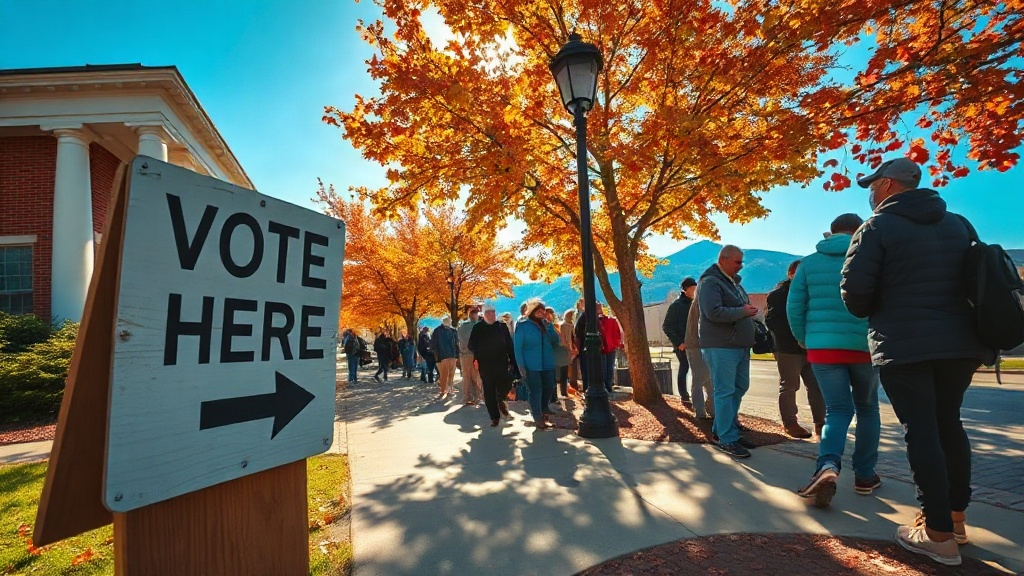
The air in New Hampshire carries the familiar bite of early autumn, but the political temperature is anything but cool. On Tuesday, voters across the Granite State will cast ballots in a primary that has become a microcosm of the Democratic Party's broader struggle for identity and strategy. The race to replace retiring Senator Jeanne Shaheen has drawn national attention, not only because it is one of the few genuine pickup opportunities for Democrats in a challenging cycle, but also because it pits a seasoned centrist against a progressive newcomer in a contest that will test the party's direction.
At stake is a seat that Democrats can ill afford to lose. With the Senate currently balanced on a knife's edge, every race carries outsized weight. New Hampshire, with its independent-minded electorate and history of ticket-splitting, offers a rare opening for Democrats to defend a traditionally blue seat in a year when the national environment has been less than favorable. The primary outcome will signal whether the party's base is more energized by pragmatic moderation or bold progressive change, a question that has roiled Democratic politics across the country.
The leading candidate in the Democratic field is Congressman Chris Pappas, a three-term representative from the state's first district. Pappas, who has built a reputation as a bipartisan problem-solver, has leaned heavily on his record of delivering for constituents on issues like infrastructure and veterans' affairs. His campaign has emphasized electability, arguing that his centrist profile is the best match for a state that has shown a willingness to elect Republicans like Governor Chris Sununu. Pappas enters the final stretch with a significant financial advantage, having reported more than $4 million in cash on hand in his latest filings. That war chest has allowed him to blanket the airwaves and build a robust ground operation, but money alone has not guaranteed a smooth path.
His primary challenger, Karishma Manzur, has emerged as a serious contender despite entering the race with far less name recognition and no prior electoral experience. Manzur, a scientist and progressive activist, has tapped into a well of grassroots energy that has surprised many observers. Her campaign has focused on issues like Medicare for All, aggressive climate action, and reducing the influence of corporate money in politics. Manzur's supporters argue that a bold progressive agenda is exactly what is needed to excite the Democratic base and drive turnout in November, especially among younger voters and communities of color. Her rise in the polls, as indicated by recent surveys from the University of New Hampshire, suggests that the appetite for change within the party is real and potent.
The contrast between the two candidates is stark, not just in policy but in style. Pappas presents himself as a steady, experienced hand who can work across the aisle to get things done. Manzur, by contrast, casts herself as a disruptor willing to challenge the status quo. The race has drawn comparisons to other recent Democratic primaries where establishment-backed candidates faced insurgent progressives, though the dynamics in New Hampshire are uniquely shaped by the state's small size and tradition of retail politics. Voters here expect to meet candidates in person, at diners and town halls, and both campaigns have crisscrossed the state in a final push to win over undecided voters.
On the Republican side, the primary has been equally consequential, though less contentious. Several candidates are vying for the nomination, with the field led by former U.S. Senator Scott Brown, who has relocated across the border from Massachusetts, and state Senate President Chuck Morse. Brown, a well-known figure with high name recognition, has positioned himself as a conservative outsider, while Morse has emphasized his deep roots in New Hampshire and his legislative experience. The Republican primary has been overshadowed by the Democratic contest, but the eventual nominee will face a formidable challenge in a state that has trended blue in federal races over the past decade.
The retirement of Jeanne Shaheen set the stage for this pivotal race. Shaheen, who served three terms and was a trailblazer as the state's first female governor and senator, announced her departure earlier this year, citing a desire to pass the torch to a new generation. Her decision created a rare open seat in a state that has not seen one since 2010. The vacancy immediately attracted a crowded field on both sides, but the Democratic primary has become the focal point of national attention due to the ideological stakes involved.
The outcome of Tuesday's primary will have immediate implications for the general election. If Pappas wins, the race will likely be framed as a choice between a moderate Democrat and a conservative Republican, with both parties appealing to the state's large bloc of independent voters. If Manzur prevails, the contest will take on a sharper ideological edge, with Republicans likely to paint her as too liberal for the state. Either way, the general election is expected to be one of the most expensive and closely watched Senate races in the country, with control of the chamber potentially hanging in the balance.
Beyond the horse race, the primary has sparked a deeper conversation about the future of the Democratic Party. New Hampshire, with its first-in-the-nation primary tradition, has long been a bellwether for political trends. The contest between Pappas and Manzur reflects a national debate over whether Democrats should prioritize winning back moderate swing voters or energizing their progressive base. That debate has played out in races from Pennsylvania to Texas, but New Hampshire offers a particularly stark test because of the state's small size and the intensity of its political engagement.
As voters head to the polls, the stakes extend far beyond the Granite State. A Democratic loss in November would make the party's path to a Senate majority nearly impossible, given the challenging map elsewhere. Conversely, a strong showing could provide a much-needed boost and signal that the party's message resonates even in a difficult year. For now, all eyes are on New Hampshire, where the first chapter of this critical story will be written on Tuesday night.
Frequently Asked Questions
Why is the New Hampshire Senate primary so important for Democrats?
The primary is crucial because it will determine the Democratic nominee in a race for an open Senate seat that the party must hold to have any realistic chance of controlling the chamber. With Senator Jeanne Shaheen retiring, the seat is vulnerable, and the primary outcome will shape the general election strategy. A loss in New Hampshire would make it extremely difficult for Democrats to achieve a majority, given the limited number of pickup opportunities elsewhere.
Who are the main candidates in the Democratic primary?
The two main candidates are Congressman Chris Pappas, a centrist with a strong fundraising advantage and a record of bipartisan work, and Dr. Karishma Manzur, a progressive activist and scientist who has gained ground with a bold policy platform. Pappas emphasizes electability and experience, while Manzur focuses on issues like Medicare for All and climate action. The race has become a proxy for the broader ideological debate within the Democratic Party.
How might the primary result affect the general election in New Hampshire?
If Pappas wins, the general election will likely be a contest between a moderate Democrat and a conservative Republican, with independents playing a decisive role. If Manzur wins, the race will be more ideologically polarized, and Republicans may try to paint her as too progressive for the state. The primary result will influence campaign messaging, voter turnout strategies, and the level of national party investment in the race.
What role do independent voters play in New Hampshire primaries?
New Hampshire allows undeclared voters to participate in either party's primary, and independents make up a significant portion of the electorate. Their participation can swing primary outcomes, especially in a competitive race like the Democratic contest. Both campaigns have courted independent voters, recognizing that their choices in the primary will also shape the general election landscape.
When will the results of the New Hampshire primary be known?
Polls close at 7:00 p.m. Eastern Time on Tuesday, and results are typically reported quickly, with most precincts reporting within a few hours. Given the high interest in the Senate race, national media will be closely watching the returns. Early voting and absentee ballots will also be counted, though the outcome may not be clear until late in the evening if the race is close.