
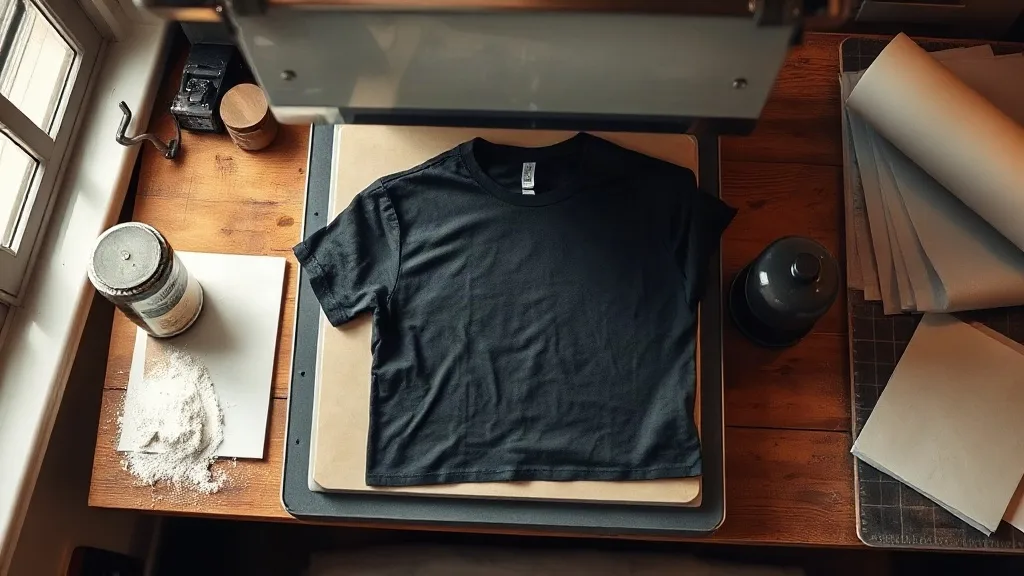
Most people who try dtf transfers for the first time do it because a customer asked for a full-color design on a dark hoodie and screen printing quoted a setup fee that made no sense for twelve pieces. That is the exact situation where direct-to-film earns its place in a small shop. You send a file, you get a printed sheet, you press it, and you are done. No screens, no color separations, no minimums that force you to order fifty shirts you cannot sell.
But the gap between a transfer that survives twenty washes and one that peels on the second is almost never about the design. It comes down to film quality, powder application, and how carefully you control your press. This guide covers the parts that actually decide whether your print holds up.
What DTF Actually Is, Stripped of the Marketing
A dtf transfer is a printed plastic film. A printer lays down water-based pigment inks onto a coated PET sheet in mirror image, then a machine dusts hot-melt adhesive powder over the wet ink. The powder sticks only where ink exists, gets shaken off the rest, and then the sheet passes through a curing unit that melts the powder into the ink. What you hold afterward is a flexible, slightly tacky image sitting on a carrier film.
When you press it, the adhesive melts into the fabric fibers while the ink layer stays on top. Peel the film cold and the image remains. That is the whole mechanism. It is closer to a heat-activated glue bond than to dye soaking into cotton, which is why fabric choice and pressure matter so much.
Why it works on almost any fabric
Because the bond is mechanical and adhesive-based rather than fiber-specific, DTF handles cotton, polyester, blends, canvas, and even some nylon. That flexibility is the main reason the process spread so fast. A shop that prints on fifty different blank styles no longer needs a different decoration method for each one.
Where it falls short
DTF adds a thin physical layer to the garment. On very lightweight, stretchy performance fabrics, that layer can feel noticeable and may crack if the print is stretched hard. It also sits on top of the surface, so on heavily textured fabrics like ribbed knits or thick fleece, fine detail can sink into the valleys. None of this is a dealbreaker, but knowing it upfront saves you from promising something the process cannot deliver.
Reading a Transfer Before You Press It
Experienced pressers judge a sheet in seconds, and you can learn the same checks. Hold the transfer up to a light. The ink should look dense and even, with no visible pinholes in solid areas. Thin, washed-out ink means the printer ran low on white or the film coating was poor, and no amount of press tweaking will fix it.
Next, look at the powder. A good sheet has a fine, uniform matte finish across the printed area with no glossy patches and no loose grains clinging to the clear margins. Clumpy powder or visible grit usually means the shaker applied too much or the cure was uneven. Those grains press into your fabric as hard specks.
- Check the edges: crisp, clean borders mean the cut was accurate. Ragged edges leave adhesive residue around the design that grabs lint in the wash.
- Feel the ink: it should be slightly flexible, not brittle or flaky. Bend a corner of the sheet gently and watch for cracking.
- Look for ghosting: faint halo marks around the image suggest the film shifted during printing.
Press Settings That Actually Hold Up
Every transfer supplier publishes numbers, and those numbers are a starting point, not gospel. Your press, your platen, and your fabric all shift the ideal settings. Still, the general range for garment DTF is 150 to 160 degrees Celsius, medium to firm pressure, and 10 to 15 seconds. Cold peel is standard for most films, though a few are designed for hot peel. Follow the supplier's instruction on this, because peeling at the wrong temperature is one of the most common causes of premature failure.
The prep step people skip
Pre-pressing the garment for three to five seconds before laying down the transfer does two things. It drives out moisture that would otherwise turn to steam under the film and cause bubbles, and it flattens the fabric texture so the adhesive makes full contact. On thick seams, pockets, and zippers, add a pressing pillow underneath so the surface is level. A print pressed over an uneven seam will fail there first.
Pressure and repress
Medium-firm pressure is the target. Too light and the adhesive never reaches the fibers. Too heavy and the ink spreads, detail softens, and on stretchy fabrics you can thin the bond line. After the cold peel, a short second press of five seconds with a Teflon sheet or parchment over the print smooths the surface and improves wash durability. That second press is a small habit with a large payoff.
Finding Reliable DTF Transfers Near Me
Searching for dtf transfers near me usually surfaces two kinds of suppliers: local print shops that run gang sheets for walk-in customers, and online services that ship next day. Both can work well. The local option wins when you need a single urgent sheet or want to inspect film quality before committing. Online wins on price per sheet and turnaround for larger orders.
Whichever route you take, ask a few direct questions before ordering volume. What film brand do they use? How do they cure, and do they check cure with a temperature probe or just a timer? Can they send one sample sheet so you can press it yourself? A supplier who hesitates on any of these is telling you something.
- Order a single test sheet first, even if the minimum is higher.
- Press it on the exact blank you plan to use, not a scrap of cotton.
- Wash it three times inside out at 40 degrees and inspect the edges.
- Only then place a bulk order.
Wash Durability: What to Tell Customers
Most quality DTF prints survive fifty or more home washes when pressed correctly. The failures come from heat, friction, and harsh chemistry. Tell buyers to wash inside out, avoid fabric softener directly on the print, skip the dryer or use low heat, and never iron directly on the design. A quick note on the packaging does more for your reviews than any other single step.
If a print does start to lift at a corner, it can often be rescued. Cover it with parchment and repress at 150 degrees for ten seconds. That reflows the adhesive and re-bonds the edge, provided the ink itself has not cracked through.
Common Questions
Can I use DTF transfers on 100 percent polyester?
Yes, and it is one of the process's strengths. Polyester takes DTF well because the bond is adhesive-based rather than dye-based. Use slightly lower heat and shorter dwell on thin poly to avoid any shine or distortion in the fabric.
Why did my transfer peel after the first wash?
In most cases it is one of three things: the garment was not pre-pressed and trapped moisture, pressure was too light so the adhesive never reached the fibers, or the film was peeled while still hot when the supplier specified cold peel. Check all three before blaming the transfer.
How long can I store unused DTF sheets?
Stored flat, away from heat and direct sun, most sheets keep for six to twelve months. Humidity is the real enemy, since moisture in the adhesive layer weakens the bond. Keep them in a sealed bag with a desiccant packet if you live somewhere damp.
Is DTF cheaper than screen printing for small runs?
For low quantities, almost always. Screen printing carries per-color setup costs that dominate the price of a small order. DTF has no setup, so it scales down cleanly to one piece. At high volumes with few colors, screen printing usually becomes cheaper per unit.
Do I need a special press for DTF?
No. A standard heat press with adjustable pressure and a digital temperature readout handles DTF fine. What matters more is consistency: a press that holds temperature evenly across the platen will outperform a fancier machine that swings twenty degrees.