
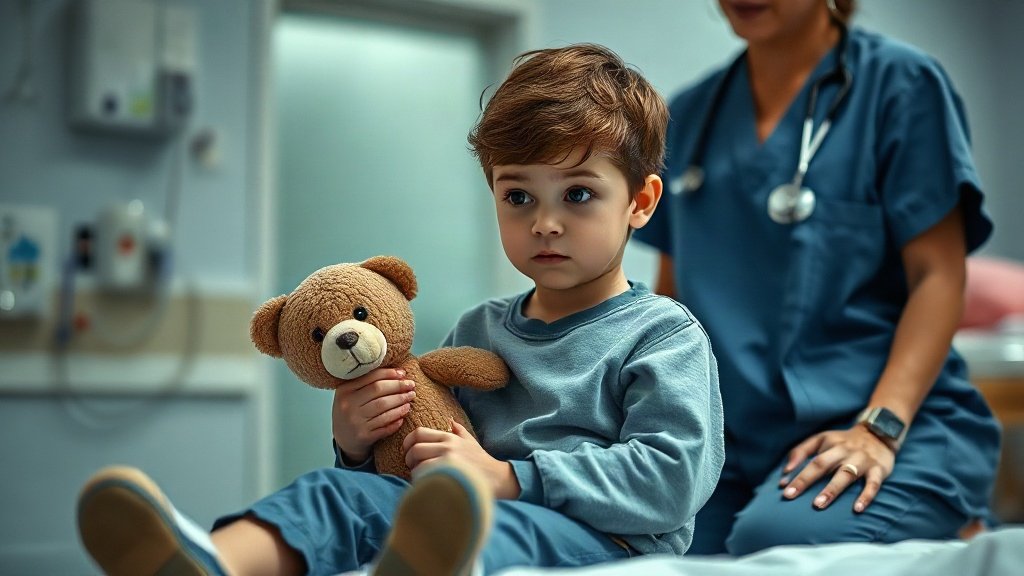
It is a scene that would stop any parent cold: a six-year-old child, still small enough to be lifted onto a hospital bed, being assessed in an emergency department because they are in the grip of a mental health crisis. Yet this is no longer a rare occurrence. Across the country, A&E staff are reporting a steady increase in very young children arriving with self-harm injuries, severe anxiety, eating disorders and emotional outbursts that their families simply cannot manage at home. The figures are stark, but behind every number is a child in profound distress and a system scrambling to respond.
What the data tells us about young children in crisis
While comprehensive national statistics for under-12s remain patchy, local audits and clinician surveys paint a worrying picture. Emergency departments in urban and rural areas alike are seeing more children under the age of ten presenting with mental health problems than they did five years ago. Nurses describe children who have scratched their arms with sharp objects, refused food for days, or become so overwhelmed by panic that they cannot breathe. These are not the typical adolescent cases that have long dominated mental health referrals; these are children who should be learning to read and ride bikes, yet are already fighting battles most adults would struggle to understand.
The rise is not limited to one condition. Self-harm in primary school children has become a particular concern, with some emergency clinicians reporting cases in children as young as six. Eating disorders, once thought to emerge mainly in teenage years, are now being diagnosed in eight- and nine-year-olds. And acute behavioural crises, often linked to undiagnosed neurodevelopmental conditions or trauma, are pushing exhausted parents to seek help at the only place open at midnight: the local hospital.
Why are children so young struggling?
There is no single cause, and experts are careful not to point fingers. Instead, they describe a perfect storm of pressures that have intensified over the past decade. The long shadow of the pandemic disrupted early schooling, socialisation and routine for many children who were toddlers or preschoolers during lockdowns. For some, the return to normal life has been anything but smooth, with anxiety and separation difficulties lingering long after restrictions lifted.
Family stress plays a significant role. Economic hardship, housing instability and parental mental health problems create an environment where a child's emotional needs can go unmet, not through lack of love, but through sheer exhaustion of resources. Schools, too, are under strain. Teachers report spending increasing amounts of time managing emotional dysregulation in the classroom, and many lack the training or support to identify early warning signs. By the time a child reaches A&E, the crisis has often been building for months, hidden behind closed doors or dismissed as 'just a phase'.
Screen time and social media are frequently blamed, but the evidence is more nuanced. For very young children, the issue is less about comparing themselves to influencers and more about the displacement of real-world play, sleep and face-to-face interaction. A six-year-old who spends hours on a tablet is not developing the same emotional regulation skills as one who learns to negotiate friendships in the playground. This is not about demonising technology; it is about recognising that early childhood is a critical window for brain development, and we are only beginning to understand what happens when that window is filled with pixels instead of people.
The emergency department as a last resort
For many families, A&E is not a choice but a default. Community child and adolescent mental health services (CAMHS) are notoriously overstretched, with waiting lists stretching into months or even years for non-urgent cases. A child who is actively self-harming or refusing to eat cannot wait six months for a first appointment. GPs, themselves under pressure, often have no immediate referral pathway other than the emergency department. The result is a system where the most acute cases are funnelled into an environment designed for physical trauma, not psychological distress.
This mismatch has real consequences. A&E departments are noisy, bright and chaotic, which can exacerbate a child's distress rather than soothe it. Staff are trained to stabilise and move on, not to provide the kind of therapeutic containment a frightened six-year-old needs. Long waits, often lasting many hours, mean that a child may be seen by multiple different clinicians, each asking the same questions, reinforcing the sense that they are a problem to be solved rather than a person to be helped. And when a child is admitted to a paediatric ward for their own safety, they may find themselves in a bed next to a child with a broken leg, surrounded by staff who are wonderful at mending bones but less confident about mending minds.
What can be done?
The solutions are not simple, but they are known. Early intervention is the most effective and cost-efficient approach, yet it remains woefully underfunded. School-based mental health teams, parenting programmes and community hubs can catch problems before they escalate to crisis point. For a six-year-old, this might mean play therapy, family support or help with sleep and routine. These are not glamorous interventions, but they can prevent a lifetime of struggle.
Emergency departments also need better resources. Dedicated mental health liaison teams, including child specialists, can assess young patients more appropriately and reduce the trauma of the A&E experience. Some hospitals have introduced 'calm rooms' or sensory spaces where children can wait in a quieter, less intimidating environment. These are small changes, but they make a big difference to a frightened child.
Finally, we need to talk more openly about children's mental health, not as a crisis to be managed but as a normal part of growing up. Parents need to know that it is okay to ask for help early, that a child who is struggling is not a reflection of their parenting, and that seeking support is a sign of strength, not failure. Schools need to embed emotional literacy into the curriculum from the very first year. And society as a whole needs to recognise that children's mental health is a public health priority, not a niche concern.
The road ahead
There is no quick fix for a problem that has been years in the making. But there is hope. Every day, children who arrive at A&E in crisis are met by nurses, doctors and mental health workers who do their best with limited resources. They sit on the floor to be at eye level with a six-year-old, they find a teddy bear from the lost property box, they speak in calm, quiet voices that cut through the panic. These small acts of kindness are not captured in statistics, but they matter. They remind us that behind the headlines and the numbers, there are children who deserve better, and adults who are trying to give it to them.
The challenge now is to build a system that catches children before they fall, rather than simply picking them up after they have hit the ground. That means investing in early years, supporting families, and treating mental health with the same seriousness as physical health. It means listening to children, even when their words are hard to hear. And it means recognising that a six-year-old in A&E is not just a statistic; they are a child who needs help, and we have a collective responsibility to provide it.
Frequently asked questions
What are the signs that a young child might be struggling with their mental health?
Signs can include persistent sadness or irritability, withdrawal from friends and activities, changes in eating or sleeping patterns, frequent physical complaints like stomach aches or headaches, and expressions of hopelessness or self-blame. In young children, distress often shows up in behaviour rather than words, so look for increased tantrums, clinginess, or regressive behaviours like bedwetting. Any talk of self-harm or suicide, even if it seems casual, should be taken seriously and addressed immediately.
How can I help my child if they are experiencing a mental health crisis?
First, stay calm and reassure your child that they are safe and loved. If there is an immediate risk of harm, go to your nearest emergency department or call emergency services. For less urgent situations, contact your GP or local child and adolescent mental health service for advice. In the meantime, try to maintain routines, encourage open conversation without pressure, and remove any means of self-harm from the home. Remember that seeking help is a sign of strength, and you do not have to manage this alone.
Why are emergency departments seeing more young children with mental health problems?
Several factors are likely contributing, including the lingering effects of the pandemic on social and emotional development, increased family stress due to economic and housing pressures, and long waiting times for community mental health services. This means that by the time families reach A&E, the situation has often become acute. Additionally, greater awareness of mental health issues may be leading more parents to seek help, which is a positive step, even if it places strain on emergency services.
What should I do if my child's school says they are struggling emotionally?
Take the school's concerns seriously and ask for a meeting to discuss what they have observed. Schools can often provide pastoral support or refer to educational psychologists. Ask about any in-school counselling services or mental health leads. Work with the school to create a consistent approach between home and school, and consider seeking advice from your GP or a child mental health professional. Early intervention is key, so do not wait for the problem to escalate.
Can a six-year-old really have a mental illness, or is it just bad behaviour?
Yes, children as young as six can experience genuine mental health conditions, including anxiety disorders, depression, and behavioural disorders. What looks like 'bad behaviour' may be a child's way of expressing overwhelming emotions they do not yet have the words for. It is important to approach the situation with curiosity rather than judgement, and to seek professional assessment if you are concerned. Early support can make a significant difference in a child's long-term wellbeing.