
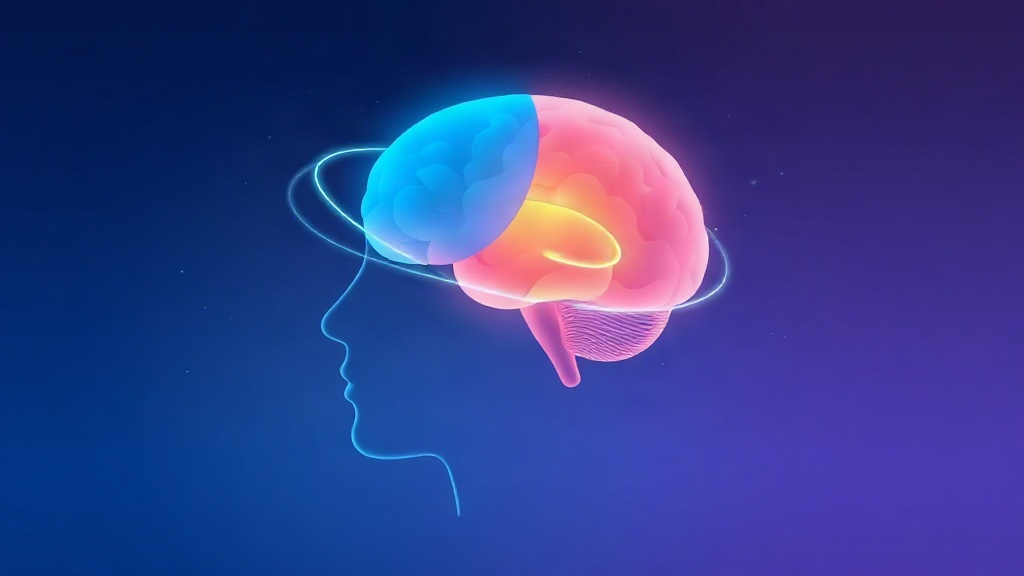
We often treat mindfulness and mindlessness as opposites. One is the prized state of focused awareness; the other, a lapse into distraction or autopilot. But what if both are necessary for a healthy mind? And what if artificial intelligence could help us move between them with greater ease? Recent advances in AI-driven attention monitoring and cognitive assistance are raising a provocative question: can machines regulate the peaceful coexistence of mindfulness and mindlessness in the human mind?
The idea may sound like science fiction, but it is already taking shape in labs and startups. AI systems are being trained to detect subtle shifts in our mental states using physiological signals, behavioral cues, and contextual data. The goal is not to eliminate mindlessness, but to optimize the rhythm between focused attention and mental rest. This emerging field, sometimes called 'cognitive ergonomics,' could reshape how we work, learn, and manage our mental health.
The Science of Mindfulness and Mindlessness
Mindfulness, at its core, is non-judgmental awareness of the present moment. It has been linked to reduced stress, improved emotional regulation, and better cognitive performance. Mindlessness, by contrast, is often seen as a failure of attention: zoning out, acting on autopilot, or getting lost in rumination. Yet research suggests that mind-wandering serves important functions. It allows the brain to consolidate memories, plan for the future, and generate creative insights. The default mode network, a set of brain regions active during rest, is crucial for self-referential thinking and imagination.
Thus, the challenge is not to eliminate mindlessness but to integrate it wisely. Too much mindfulness can lead to hyper-focus and burnout; too much mindlessness can impair productivity and safety. The ideal state may be a dynamic balance, where we can intentionally shift between focused engagement and relaxed defocus depending on the task and context. This is where AI might play a surprising role.
How AI Can Detect Mental States
Modern AI can infer mental states from a variety of data sources. Wearable devices measure heart rate variability, skin conductance, and brainwave activity via EEG. Smartphone sensors track typing speed, app usage, and even facial expressions through cameras. Natural language processing analyzes the tone and coherence of our speech or writing. By combining these signals, machine learning models can classify whether a person is in a state of focused attention, drowsy mind-wandering, or something in between.
For example, researchers have developed algorithms that predict lapses of attention in real time during monotonous tasks like driving or monitoring screens. Other systems detect when an office worker is slipping into unproductive rumination and suggest a short break or a mindfulness exercise. These interventions are designed not to punish mindlessness, but to guide the user toward a more adaptive cognitive rhythm.
AI as a Regulator, Not a Dictator
The key to peaceful coexistence lies in AI's ability to act as a gentle regulator rather than an authoritarian supervisor. Instead of forcing constant focus, an AI coach could learn an individual's optimal patterns of work and rest. It might recommend a 5-minute mindfulness session when stress levels rise, or encourage a bout of free-flowing daydreaming after intense problem-solving. Over time, the system could personalize its suggestions based on feedback and outcomes.
Some companies are already prototyping such tools. For instance, a productivity app might use your calendar and biometric data to schedule 'mind-wandering breaks' after long meetings. A meditation app could adjust its guidance based on real-time EEG feedback, knowing when to push for deeper focus and when to allow the mind to drift. These applications treat mindfulness and mindlessness not as enemies but as complementary resources.
The Promise for Mental Health and Creativity
The potential benefits are significant. For people with anxiety or depression, an AI that helps regulate rumination could provide timely support between therapy sessions. For creative professionals, a system that encourages productive mind-wandering might unlock new ideas. In education, adaptive learning platforms could detect when a student is mentally fatigued and insert a brief mindfulness exercise or a playful distraction to restore attention.
Moreover, the data generated by such systems could advance our scientific understanding of attention. Large-scale, real-world datasets on mental states would allow researchers to test theories about the interplay between focus and rest, leading to better interventions. This could democratize mental health support, making personalized cognitive training accessible to millions.
Ethical and Practical Challenges
However, the path is fraught with ethical pitfalls. Who owns the data about your mental states? Could employers use attention-tracking AI to penalize workers for daydreaming? There is a risk that such technology could become a tool for surveillance and control, undermining the very autonomy that mindfulness is supposed to cultivate. Privacy safeguards, informed consent, and transparency about how AI algorithms make recommendations are essential.
Another challenge is accuracy. Mental states are highly subjective and context-dependent. A model trained on one population may not generalize to others. False positives could lead to unnecessary interruptions, while false negatives might miss critical moments of distress. Moreover, over-reliance on AI could weaken our own metacognitive skills, making us less able to self-regulate without digital assistance.
The Road Ahead
Despite these concerns, the trend is clear: AI is moving into the intimate space of our minds. The most promising approaches will likely be those that empower users rather than control them. Imagine a wearable that gently vibrates when it detects prolonged mind-wandering during a task you wanted to focus on, but also suggests a daydream break when you have been intensely focused for too long. The system becomes a partner in self-regulation, not a boss.
Researchers are also exploring 'neurofeedback' loops where the AI provides real-time signals about brain activity, allowing users to learn how to shift states voluntarily. Over time, this training could enhance our natural ability to balance mindfulness and mindlessness, even without the device. In this scenario, AI serves as a temporary scaffold that eventually becomes unnecessary.
Conclusion: A New Kind of Coexistence
The question of whether AI can regulate the peaceful coexistence of mindfulness and mindlessness is not just technical; it is philosophical. It forces us to reconsider what we value in mental life. Perhaps the goal is not constant mindfulness but a flexible mind that can move gracefully between focus and drift. AI, if used wisely, could help us achieve that balance. But the ultimate responsibility lies with us: to ensure that the technology respects our autonomy and enhances, rather than diminishes, our humanity.
Frequently Asked Questions
Can AI really detect mindfulness and mindlessness accurately?
AI systems can infer mental states with reasonable accuracy using physiological and behavioral data, but they are not perfect. The subjective nature of these states means there is always some uncertainty. Ongoing research aims to improve reliability, especially across different individuals and contexts.
Will AI replace mindfulness meditation teachers?
AI is unlikely to replace human teachers entirely. It can provide scalable, personalized feedback, but the human element of compassion and experiential guidance remains valuable. AI may augment teachers by offering data-driven insights into a student's practice.
Is there a risk that AI will force us to be mindful all the time?
A well-designed AI should not force any state. Its role is to help users achieve their own goals, whether that involves more focus or more creative rest. The risk of over-control exists if systems are designed with productivity as the sole metric, which is why ethical guidelines are crucial.
How can I protect my mental data if I use such AI tools?
Look for tools that offer strong privacy controls, such as local data processing, encryption, and clear consent policies. Be wary of free apps that monetize your data. Advocate for regulations that protect cognitive liberty and mental privacy.