
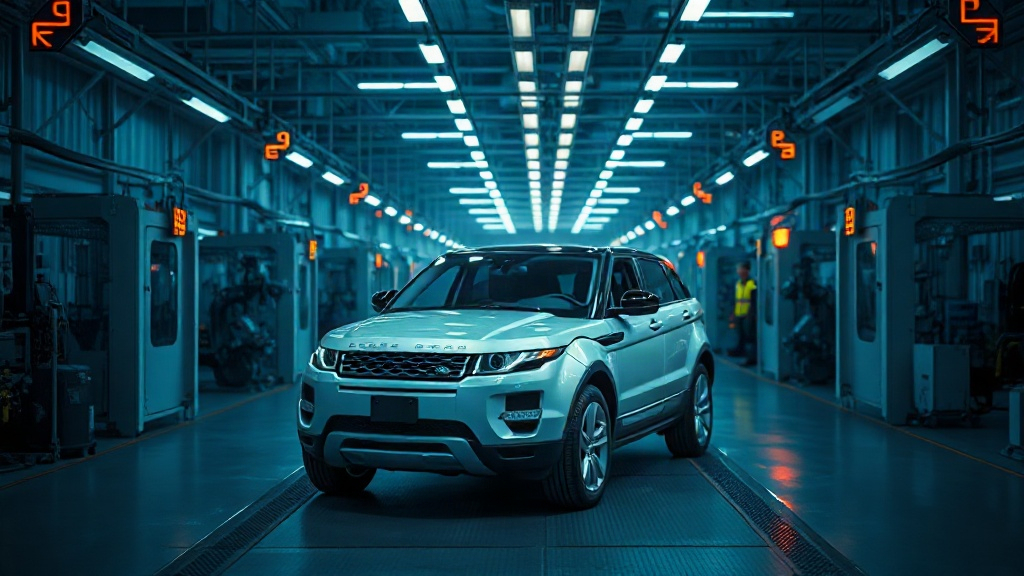
Jaguar Land Rover's decision to cut 4,000 jobs over the next two years is not just another corporate downsizing headline. It is a stark indicator of the tectonic shifts reshaping the global automotive industry. The British luxury carmaker, long a symbol of engineering prestige and heritage, is being forced to confront a brutal new reality: intensifying competition from Chinese electric vehicle manufacturers, escalating trade barriers, and the staggering financial demands of electrification. For industry observers, employees, and even consumers, this move raises a pressing question: is this a temporary setback or a sign of deeper structural challenges for traditional automakers?
On the surface, the job cuts might seem like a routine cost-saving measure. But dig a little deeper and the story reveals much more. JLR, like many legacy automakers, is caught in a perfect storm. The company must simultaneously defend its market share against nimble, well-funded Chinese rivals, navigate the unpredictable terrain of international trade policy, and invest billions in new electric vehicle platforms. All of this while trying to maintain the premium brand image that has been its lifeblood for decades. The 4,000 job reductions, which will be spread across its global operations, are a direct response to these pressures. Yet they also raise uncomfortable questions about the future of manufacturing jobs in an industry that is rapidly reinventing itself.
The Forces Driving Jaguar Land Rover's Job Cuts
To understand why JLR is taking such drastic action, it helps to look at the three main forces the company itself has identified: Chinese competition, US tariffs, and the electric vehicle transition. Each one alone would be a significant challenge; combined, they create an almost existential threat to traditional business models.
Chinese Competition: A New Kind of Rival
For decades, Western automakers viewed China primarily as a vast and growing market for their products. But Chinese manufacturers have evolved rapidly. Companies like BYD, Nio, and Geely are no longer just domestic players; they are aggressively expanding into Europe and other markets with electric vehicles that offer compelling technology, sleek designs, and often lower price points. Their vertical integration, access to critical battery supply chains, and state support give them structural advantages that Western firms struggle to match.
JLR, with its focus on luxury SUVs and sedans, might have once seemed insulated from this competition. But the reality is that Chinese EVs are increasingly targeting the premium segment. Brands like Zeekr and HiPhi are positioning themselves as direct competitors to established luxury names. For JLR, this means defending its turf not just on brand heritage but on technology, range, connectivity, and price. That is an expensive battle, and one that requires significant investment in research and development, marketing, and manufacturing efficiency. The job cuts are partly about freeing up capital to fight that battle more effectively.
US Tariffs: An Unpredictable Trade Landscape
Trade policy has become a major wildcard for global automakers. The United States, one of JLR's most important markets, has imposed tariffs on vehicles and components in recent years, citing national security and trade imbalance concerns. These tariffs have increased the cost of exporting vehicles from the UK and Europe to the US, squeezing profit margins. For a company like JLR, which builds many of its vehicles in the UK and relies heavily on transatlantic sales, the impact is direct and painful.
Moreover, the threat of further tariff escalation looms. The political climate in Washington remains unpredictable, and automakers must plan for multiple scenarios. This uncertainty discourages long-term investment and encourages cost-cutting measures like workforce reductions. JLR is not alone in this; many other European automakers have expressed similar concerns. But for a company already navigating a difficult transition to electric vehicles, tariffs add another layer of financial strain.
The Electric Vehicle Transition: A Costly Revolution
Perhaps the most profound driver of JLR's restructuring is the shift from internal combustion engines to electric powertrains. This transition is not merely a matter of swapping out engines; it requires a fundamental redesign of vehicle platforms, manufacturing processes, and supply chains. Electric vehicles have fewer moving parts, which means fewer workers are needed on assembly lines. They also require different skill sets, favoring software engineers and battery specialists over traditional mechanical engineers.
JLR has committed to electrifying its entire lineup by 2030, with the first all-electric Range Rover expected in the near future. This commitment is essential for the company's long-term survival, but it comes with enormous upfront costs. Developing new EV platforms, securing battery supplies, and retooling factories are capital-intensive endeavors. At the same time, the profitability of EVs remains uncertain, especially as price competition intensifies. The 4,000 job cuts are, in part, a way to redirect resources from legacy operations toward these new investments. It is a painful but strategic realignment.
What the Job Cuts Mean for the Broader Auto Industry
JLR's announcement is not an isolated event. It is part of a broader wave of restructuring sweeping through the automotive sector. Traditional automakers around the world are grappling with the same challenges: the need to invest in EVs, the rise of Chinese competitors, and the volatility of trade policy. As a result, we are seeing a wave of job cuts, plant closures, and strategic pivots. Ford, General Motors, Volkswagen, and Stellantis have all announced significant workforce reductions in recent years. JLR's move reinforces the message that no company, no matter how prestigious, is immune to these forces.
For workers, this trend is deeply unsettling. Manufacturing jobs in the auto industry have long been considered stable, well-paying positions that anchor local economies. As the industry transitions to EVs, those jobs are changing or disappearing. The skills required are different, and the number of workers needed per vehicle is lower. Governments and companies are scrambling to provide retraining programs, but the pace of change is outstripping the ability of many workers to adapt. The human cost of this transition is real, and it is likely to be a major political issue in the coming years.
For consumers, the impact is more indirect but still significant. Job cuts and cost-saving measures can affect product development timelines, customer service, and even vehicle quality. JLR has faced criticism in the past for reliability issues, and some analysts worry that aggressive cost-cutting could exacerbate those problems. On the other hand, a leaner, more focused company might be better positioned to invest in the technologies that consumers increasingly demand. The key will be whether JLR can execute its restructuring without sacrificing the quality and luxury experience that its customers expect.
Can Jaguar Land Rover Navigate This Transition?
The road ahead for JLR is filled with uncertainty. The company has a strong brand heritage, a loyal customer base, and a clear plan for electrification. But execution will be everything. Cutting 4,000 jobs is a painful but necessary step to free up resources for the future. However, it is not a solution in itself. JLR must also accelerate its product development, forge strategic partnerships, and find ways to reduce costs without undermining its premium positioning.
One potential bright spot is JLR's parent company, Tata Motors, which has deep pockets and a long-term vision. Tata has been willing to invest heavily in JLR's future, and that support provides a degree of stability. Additionally, JLR's focus on luxury SUVs, a segment that remains relatively profitable, gives it some insulation from the most brutal price competition. If the company can successfully launch compelling electric versions of its iconic models, it may emerge from this transition stronger than before.
But the competitive landscape is unforgiving. Chinese EV makers are not standing still, and they are increasingly targeting the luxury segment. Tesla continues to dominate the premium EV market. And traditional rivals like Mercedes-Benz and BMW are also pouring billions into electrification. JLR cannot afford to stumble. The next two years will be a critical test of its strategy and its resilience.
Frequently Asked Questions
Why is Jaguar Land Rover cutting 4,000 jobs?
Jaguar Land Rover is cutting jobs primarily due to three factors: intense competition from Chinese electric vehicle manufacturers, the impact of US tariffs on its exports, and the high costs associated with transitioning to electric vehicles. The cuts are part of a broader restructuring to reduce costs and redirect investment toward future technologies.
How will the job cuts affect Jaguar Land Rover's operations?
The job cuts will be spread across JLR's global operations over a two-year period. While specific details may vary, the reductions are expected to affect various departments and locations. The goal is to streamline operations and improve efficiency, but it may also lead to slower product development or changes in customer service as the company adjusts to a smaller workforce.
Does this mean Jaguar Land Rover is in financial trouble?
While the job cuts are a cost-saving measure, they do not necessarily indicate immediate financial distress. JLR is investing heavily in electric vehicles and facing significant market pressures, so the cuts are a strategic move to maintain competitiveness. However, the company is clearly under financial strain, and the success of its EV strategy will be crucial for its long-term health.
Will the job cuts affect the quality of Jaguar and Land Rover vehicles?
There is always a risk that aggressive cost-cutting could impact product quality, especially in areas like manufacturing and quality control. However, JLR has stated that its focus remains on delivering premium vehicles. The company will need to balance cost reduction with maintaining the high standards that its customers expect. Time will tell whether the restructuring affects vehicle reliability or customer satisfaction.
What does this mean for the future of the auto industry?
JLR's job cuts are part of a larger trend in the auto industry, where traditional manufacturers are restructuring to compete in the electric vehicle era. This transition is leading to job losses in some areas while creating new opportunities in others. The industry is likely to see continued upheaval as companies adapt to new technologies, competition, and trade policies.