
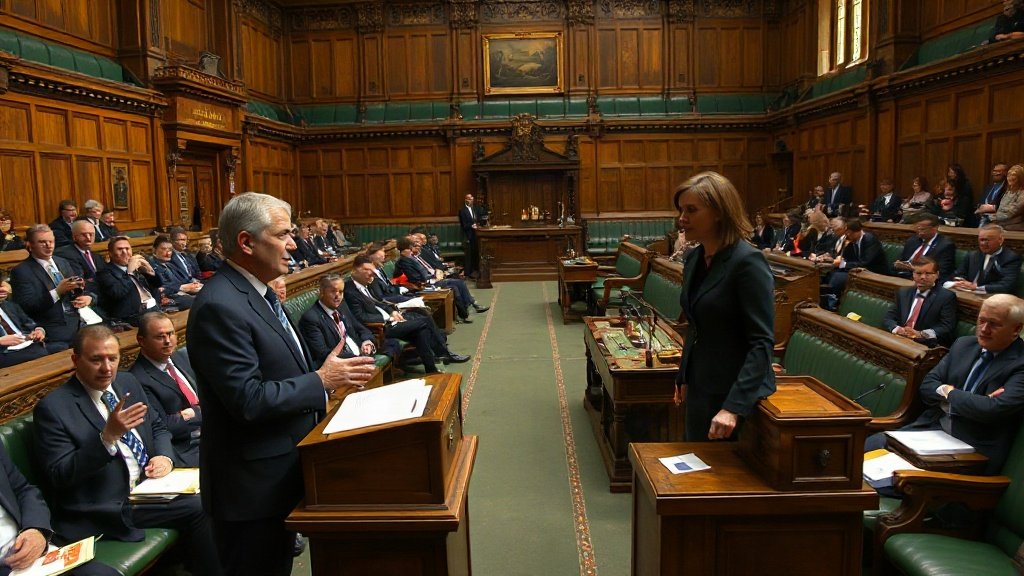
Andy Burnham's first Prime Minister's Questions was never going to be a gentle introduction. The former Greater Manchester mayor, catapulted into Downing Street after a turbulent leadership contest, stood at the dispatch box for the first time with the weight of a party and a country on his shoulders. The atmosphere in the Commons was electric, the benches packed, and the opposition benches led by Kemi Badenoch were in no mood for pleasantries. From the opening moments, it was clear that the central theme would be economic credibility, specifically the rising cost of borrowing and the government's spending plans.
Badenoch, sharp and focused, wasted no time in challenging Burnham on the government's fiscal stance. She pointed to recent movements in gilt yields, arguing that the markets were already signalling concern about the new administration's approach. "Can the Prime Minister explain to the British people why borrowing costs are rising on his watch?" she asked, her voice cutting through the noise. It was a direct hit, designed to unsettle a leader who has spent years building a reputation as a champion of public services but has faced persistent questions about how he would pay for his ambitious agenda.
Burnham, for his part, looked composed but not entirely comfortable. He leaned heavily on the language of "responsible investment" and "long-term growth," echoing the economic framework he had outlined during the leadership campaign. He argued that the previous government had left the economy in a fragile state and that his administration was taking the necessary steps to restore stability. But the details remained thin, and the opposition knew it. Badenoch pressed again, citing the independent forecasts that suggested the fiscal headroom was narrower than the new government had claimed. The exchange set the tone for a session that would be dominated by the twin pressures of borrowing costs and public spending.
The backdrop to this confrontation is crucial. The UK economy has been walking a tightrope for months, with inflation stubbornly above target, growth sluggish, and public finances stretched. The new government, eager to differentiate itself from its predecessor, has promised a break from austerity while also pledging to keep the markets on side. It is a delicate balancing act, and Burnham's first PMQs exposed just how difficult it will be to maintain. His answers, while delivered with his characteristic northern plain-speaking, lacked the specificity that MPs and the public were looking for.
Why the markets are watching closely
The bond market has become the unofficial referee of UK fiscal policy. When investors demand higher yields on government debt, it signals that they see more risk in lending to the state. That, in turn, feeds directly into the cost of mortgages, business loans, and the government's own debt interest payments. In the weeks leading up to this PMQs, yields on ten-year gilts had crept upward, a trend that opposition parties were quick to link to the new government's plans. Whether that link is fair is a matter of debate, but in politics, perception often trumps reality.
Burnham attempted to push back against this narrative, arguing that global factors were at play and that other advanced economies were experiencing similar pressures. He pointed to the recent budget from the previous government, which he said had left a "black hole" in the public finances. But the opposition was not buying it. Badenoch's follow-up questions were relentless, demanding to know whether the Prime Minister would rule out further tax rises or spending cuts. Burnham sidestepped, promising to "make the right decisions for the long term" but offering no concrete commitments.
The spending dilemma
At the heart of the debate is a simple but brutal arithmetic. The new government has inherited a public sector that is crying out for investment after years of real-terms cuts. Hospitals are crumbling, schools are overcrowded, and local councils are on the brink of bankruptcy. Burnham's political identity is built on addressing these issues, and his supporters expect him to deliver. But doing so requires money, and money is not free. The question, then, is where the balance lies between fiscal discipline and public investment.
Burnham's answer, at least in this session, was to invoke the language of "growth." He argued that targeted investment in infrastructure, skills, and green energy would expand the economy's productive capacity and, over time, reduce the debt-to-GDP ratio. It is a coherent economic argument, and one that many economists support. But it is also a long-term bet, and the markets are not known for their patience. The opposition was quick to point out that even the previous government's more modest spending plans had been met with scepticism by investors.
What this means for households and businesses
For ordinary people, the debate over borrowing costs is not abstract. When gilt yields rise, mortgage rates tend to follow. The average two-year fixed mortgage rate has already crept up in recent weeks, adding hundreds of pounds to monthly repayments for those remortgaging. Businesses, too, feel the pinch through higher borrowing costs and reduced consumer confidence. Burnham acknowledged this in his answers, but his empathy did not translate into a clear plan to shield households from the immediate pain.
One of the most striking moments came when a backbench MP from the government's own side asked about support for first-time buyers. Burnham's response, while heartfelt, was notably vague. He spoke of "building more homes" and "making the dream of homeownership a reality," but offered no new policies or funding commitments. It was a reminder that, in politics, the gap between aspiration and action can be wide, especially in the early days of a government.
The opposition's strategy
Badenoch's approach was disciplined and effective. She avoided the trap of appearing overly partisan, instead framing her questions as those of a concerned citizen asking for accountability. She cited the independent Office for Budget Responsibility, a move designed to lend her arguments an air of non-partisan authority. She also made a point of acknowledging some of the challenges the government inherited, which made her later criticisms seem more balanced. It was a masterclass in opposition politics, and it left Burnham looking, at times, like a man who had prepared for a different fight.
The session also saw contributions from other parties, including the Liberal Democrats and the SNP, who focused on specific regional impacts. The SNP's Westminster leader pressed Burnham on whether he would maintain the previous government's commitment to certain infrastructure projects in Scotland, a question that Burnham answered with a vague promise to "work with all parts of the UK." It was a missed opportunity to show that his government would be different in its approach to devolution, a theme that had been central to his campaign.
The bigger picture: a government under pressure
Burnham's first PMQs was never going to define his premiership, but it offered an early glimpse of the battles ahead. The economic challenges are real, and the room for manoeuvre is limited. The new Prime Minister has staked his reputation on being a different kind of leader, one who speaks plainly and puts people before politics. But the demands of office are already testing that image. The question is whether he can maintain his authenticity while navigating the brutal realities of fiscal policy.
One thing is certain: the opposition will not let up. Badenoch has found a line of attack that resonates, and she will return to it again and again. The government, for its part, must quickly develop a more robust economic narrative, one that can withstand scrutiny from both the markets and the electorate. The coming weeks will be crucial, as the new Chancellor prepares to deliver the first budget under this administration. That budget will be the real test, and it will need to satisfy investors, businesses, and the public simultaneously. It is an almost impossible task, but it is the one that Burnham has chosen.
What to watch next
In the short term, all eyes will be on the Treasury and any signals about the upcoming fiscal statement. The government has promised to publish a detailed economic plan, and the content of that plan will be dissected line by line. In the longer term, the key question is whether the UK can avoid a return to the austerity politics of the past while keeping the markets calm. It is a question that has haunted British politics for over a decade, and it is now Burnham's to answer.
For now, the Prime Minister can take some comfort in the fact that his first PMQs is behind him. But the real work is only just beginning. The borrowing costs will not disappear because of a well-delivered soundbite, and the spending pressures will not ease because of a sincere promise. The test of leadership is not how you handle the questions you expect, but how you respond to the ones you don't. On that measure, Burnham's first outing was a mixed performance: steady, but not yet convincing. The country will be watching to see if he can do better.
Frequently Asked Questions
Why did borrowing costs rise after the new government took office?
Borrowing costs, as measured by gilt yields, can rise for several reasons, including expectations of higher government spending, inflation concerns, or global economic shifts. In this case, some investors may be reacting to the new government's stated intention to increase public investment, which they worry could lead to higher debt issuance. However, global factors also play a role, and it is too early to attribute the movement solely to domestic policy.
What did Andy Burnham say about spending cuts at PMQs?
Burnham avoided making specific commitments on spending cuts. He emphasised the need for "responsible investment" and argued that his government would focus on growth to improve the public finances. He did not rule out future adjustments but framed his approach as one of long-term thinking rather than immediate austerity.
How does the rise in borrowing costs affect ordinary people?
When the government's borrowing costs rise, it can lead to higher interest rates across the economy. This often translates into more expensive mortgages, car loans, and business credit. It can also put pressure on public services if the government has to spend more on debt interest, leaving less for other priorities like the NHS and education.
Will the new government's first budget calm the markets?
That remains to be seen. The budget will need to strike a careful balance between investing in public services and maintaining fiscal credibility. If the markets view the plans as credible and growth-oriented, yields could stabilise or fall. If they perceive the plans as fiscally reckless, borrowing costs could rise further.