
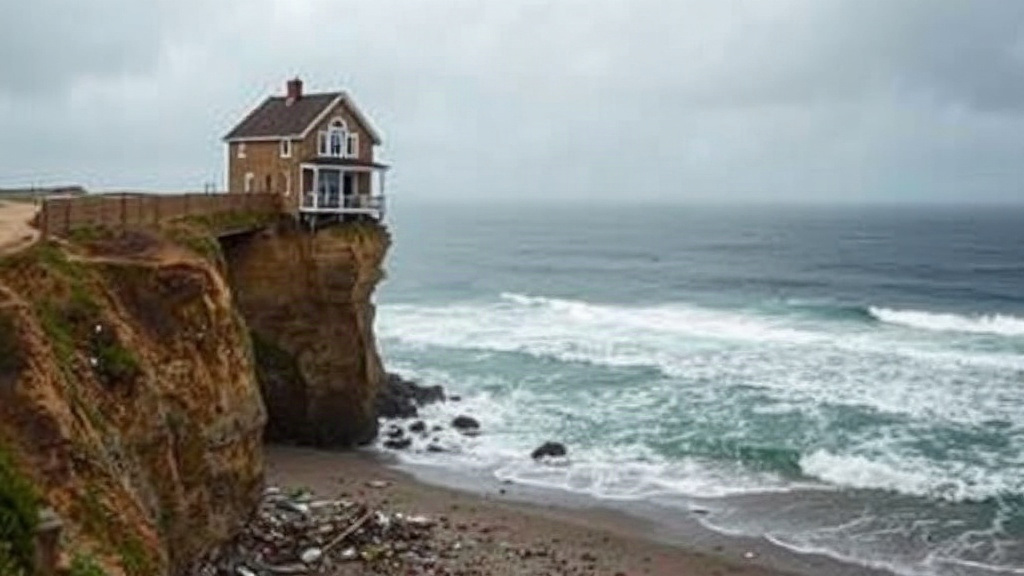
On a quiet morning in Pacifica, California, Linda Marquez watched as the ocean swallowed the last remnants of her backyard. For years, she had enjoyed unobstructed views of the Pacific from her modest home on the bluffs. But last winter, a series of powerful storms, combined with gradually rising sea levels, undermined the cliff beneath her property. Within days, her deck collapsed, and she was forced to evacuate. Her story is not unique. Along California's 840-mile coastline, from San Diego to Humboldt County, rising seas and erosion are claiming homes and beaches at an alarming rate. Scientists warn that this is just the beginning.
The Slow-Motion Crisis Accelerates
For decades, coastal erosion has been a natural process, shaping California's dramatic cliffs and sandy shores. But the pace has quickened. According to a 2023 report by the California Ocean Protection Council, sea levels along the state's coast could rise by as much as 7 feet by 2100 if greenhouse gas emissions continue unabated. Even under moderate scenarios, a 1- to 2-foot rise by 2050 would put thousands of homes and critical infrastructure at risk. The report identified nearly $150 billion in property at risk from a 6-foot rise, including schools, hospitals, and highways.
The immediate trigger for recent destruction has been a combination of El Niño conditions, which bring warmer ocean temperatures and higher sea levels, and atmospheric rivers that dump massive amounts of rain. These storms generate powerful waves that batter the coast, while saturated cliffs become prone to landslides. In 2023, winter storms caused widespread damage in Santa Cruz County, where parts of the iconic Capitola Pier were washed away. In Southern California, beach towns like Malibu and Newport Beach saw significant sand loss, leaving rocky shores where soft sand once welcomed tourists.
Beaches: The Vanishing Buffer
Beaches are not just tourist attractions; they are natural barriers that absorb wave energy and protect inland areas from flooding. But as sea levels rise, beaches are being squeezed between rising waters and fixed development. Coastal armoring, such as seawalls and revetments, can protect specific properties but often accelerates erosion elsewhere by preventing sand from naturally replenishing. A study published in the journal Geomorphology found that nearly 70% of California's beaches are eroding, with some losing up to 3 feet per year.
The loss of beaches has economic repercussions. Tourism in California generates over $100 billion annually, with beach-related activities a major draw. A 2019 study by the California Coastal Commission estimated that beach erosion could cost the state's economy billions in lost revenue and property value. Moreover, beaches provide recreational opportunities that are integral to the California lifestyle, from surfing to sunbathing.
Adaptation vs. Retreat
Coastal communities are grappling with difficult choices. Some have opted for managed retreat, relocating vulnerable structures and restoring natural dunes. Pacifica, for instance, has purchased several cliffside properties and plans to convert them into open space. Others have invested in costly engineering solutions, such as beach nourishment, where sand is dredged from offshore and pumped onto eroding beaches. But nourishment is temporary and expensive, often costing millions per mile and requiring periodic replenishment.
In the long run, experts argue that retreat is inevitable for many areas. "We can't engineer our way out of sea-level rise," says Dr. Sarah Newkirk, coastal director at The Nature Conservancy. "We need to rethink how we live with water and give the coastline room to adapt."
The Business Angle: Real Estate and Insurance
The real estate market is beginning to reflect these risks. Properties in high-risk zones are seeing slower price appreciation and longer time on market. Some lenders are requiring additional flood insurance, and insurers are raising premiums or withdrawing from coastal areas altogether. In 2023, several major insurers announced they would no longer write new policies in California due to wildfire and flood risks, leaving homeowners with few options. The California FAIR Plan, a state-run insurer of last resort, has seen its enrollment surge, but it offers limited coverage and is financially strained.
For businesses, the implications are profound. Coastal hotels, restaurants, and recreational facilities face operational disruptions and higher insurance costs. Supply chains that rely on ports, such as the Port of Long Beach, are vulnerable to flooding and storm surges. The Port of Long Beach, one of the busiest in the U.S., is investing in a $1.5 billion sea-level rise adaptation project, including elevated wharfs and flood defenses.
Is Worse to Come?
The science points to yes. The Intergovernmental Panel on Climate Change (IPCC) projects that global sea levels will continue to rise for centuries, even if emissions are drastically reduced, due to the thermal expansion of oceans and melting ice sheets. For California, this means more frequent flooding at high tide, more intense storm surges, and accelerated erosion. A 2021 study in Nature Climate Change found that by 2050, the frequency of coastal flooding in California could increase by 20 to 30 times, turning what are now rare events into regular occurrences.
Moreover, the loss of beaches and coastal wetlands reduces carbon sequestration and biodiversity, creating feedback loops that exacerbate climate change. The stakes are high, and the window for action is narrowing.
What Can Be Done?
While the challenge is daunting, there are steps that can mitigate the damage. First, reducing greenhouse gas emissions is essential to slow the rate of sea-level rise. Second, investing in natural defenses, such as restoring wetlands and dunes, can provide cost-effective protection. Third, updating building codes and land-use policies to discourage development in high-risk areas is critical. Finally, fostering regional collaboration among governments, businesses, and communities can ensure that adaptation strategies are equitable and effective.
As Linda Marquez rebuilds her life inland, she reflects on the power of the ocean. "I always knew the sea was mighty, but I never thought it would take my home. Now I see it differently. We need to respect it and give it space." Her story is a cautionary tale for a state that must confront a future where the coastline is constantly shifting.
Frequently Asked Questions
How much has sea level risen in California so far?
Sea levels along the California coast have risen about 8 inches over the past century, according to tide gauge data. The rate has accelerated in recent decades, with satellite measurements showing a global rise of about 3.4 millimeters per year since 1993.
Which areas in California are most vulnerable to sea-level rise?
Low-lying coastal areas such as San Francisco Bay, the Sacramento-San Joaquin River Delta, and parts of Los Angeles and Orange counties are particularly vulnerable. Communities built on bluffs, like those in Pacifica and Santa Cruz, face erosion risks.
Can seawalls protect coastal homes?
Seawalls can protect individual properties but often worsen erosion on adjacent beaches by reflecting wave energy and preventing sand deposition. They are also expensive and require maintenance, making them a short-term fix rather than a long-term solution.
What is managed retreat and is it being used in California?
Managed retreat involves moving people and infrastructure away from high-risk areas. Some California communities, like Pacifica and Ventura, have begun buying out vulnerable properties and restoring natural buffers. However, it remains controversial due to property rights and economic concerns.
How can businesses prepare for rising seas?
Businesses can assess their exposure to flooding and erosion, invest in resilience measures such as elevated structures and flood barriers, diversify supply chains, and advocate for policies that support coastal adaptation. Insurance and financial planning should also account for increasing risks.