
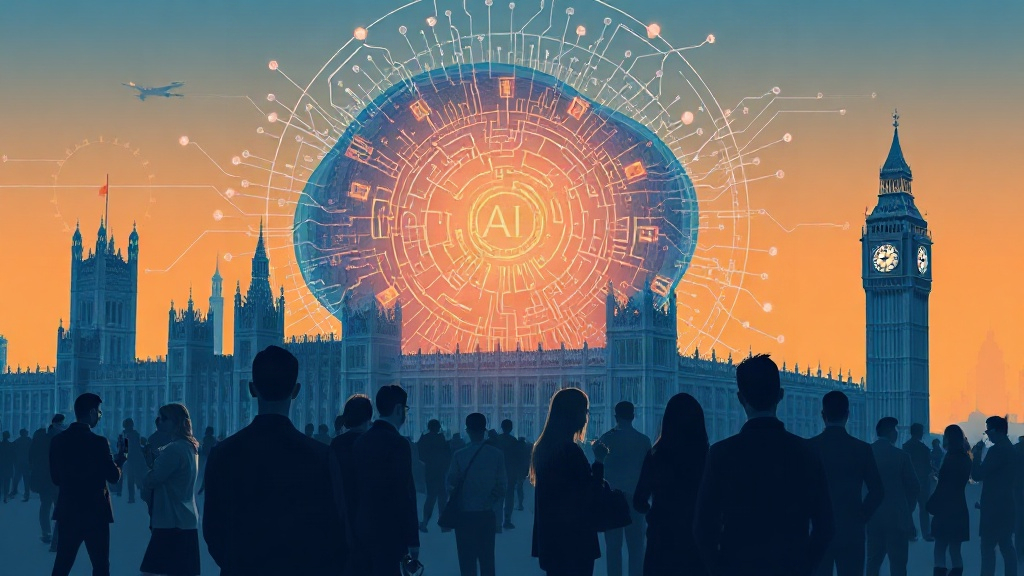
Artificial intelligence is transforming the way we live, work, and interact, but along with its benefits come profound risks. In the United Kingdom, a growing chorus of politicians from both Houses of Parliament is now warning that existing legal frameworks are simply not equipped to handle the human rights challenges posed by AI systems. Their concern is not hypothetical: from biased algorithms affecting access to jobs and housing to invasive surveillance technologies and opaque decision-making, the potential for harm is real and present. This week, members of the House of Commons and the House of Lords have jointly called for a new, dedicated law to address what they describe as a clear and urgent threat to fundamental rights.
The call comes amid a broader global debate about how to regulate AI. While the European Union has been developing its comprehensive AI Act, the UK has so far favoured a more sector-based, principles-driven approach. However, many parliamentarians argue that this patchwork approach leaves dangerous gaps. They point to cases where automated systems have made decisions affecting people's lives without adequate transparency, accountability, or avenues for redress. AI human rights legislation is now seen by many as the only way to ensure that innovation does not come at the cost of basic freedoms.
Why Current Laws Fall Short
Existing legislation, including the Human Rights Act 1998 and the Equality Act 2010, was drafted long before the rise of machine learning and generative AI. These laws were designed for a world where decisions were made by humans or relatively simple automated processes. Modern AI systems, however, operate at a scale and complexity that can outpace traditional legal remedies. For example, a discriminatory hiring algorithm may affect thousands of applicants simultaneously, yet identifying and challenging that discrimination under current law is extremely difficult. Victims often cannot access the proprietary algorithms or understand how decisions were reached.
Lawmakers from across the political spectrum have expressed frustration that the government's current strategy relies too heavily on voluntary guidance and existing regulators. In a recent debate, one MP noted that asking existing bodies like the Information Commissioner's Office or the Equality and Human Rights Commission to oversee AI without new powers and resources is like "sending a firefighter to a blaze with a water pistol." The result, critics say, is a regulatory vacuum where tech companies are left to self-police, and citizens are left without meaningful protection.
What a New Law Might Look Like
While the exact shape of proposed legislation is still under discussion, several key elements have emerged from parliamentary reports and cross-party working groups. These include mandatory human rights impact assessments for high-risk AI systems, a statutory duty on developers and deployers to prevent foreseeable harms, and the creation of a dedicated AI regulator with enforcement powers. Some have also called for a ban on certain uses of AI that are deemed incompatible with human rights, such as real-time facial recognition in public spaces or social scoring systems.
Another critical component is transparency. Politicians are pushing for requirements that AI systems be explainable in plain language, so that individuals can understand how decisions affecting them are made. This would go beyond the current data protection regime, which focuses on personal data, to address the broader algorithmic logic. Furthermore, there are calls for an independent avenue for redress, perhaps through a specialist tribunal or ombudsman, to which individuals can bring complaints about AI-related harms without facing prohibitive costs.
The Human Cost of Inaction
Behind the technical debates are real human stories. Consider the case of a single mother wrongly flagged by a benefits fraud algorithm, cutting off her income for weeks while she struggled to prove her innocence. Or the job applicant rejected by an AI screen tool because the system was trained on data that reflected historical gender biases. Or the peaceful protester whose face was scanned and logged by a police facial recognition system without her consent. These are not distant dystopias; they are happening now, and they illustrate why AI threats to civil liberties cannot be ignored.
Human rights organisations have long warned that AI can amplify existing inequalities and create new forms of discrimination. A report by a leading rights group found that predictive policing tools in some UK cities disproportionately targeted minority neighbourhoods, even when controlling for crime rates. Such findings have added urgency to the political calls for action. As one peer put it during a recent committee hearing, "We are sleepwalking into a surveillance society, and we need laws that wake us up."
Balancing Innovation and Protection
Critics of stricter regulation often argue that it could stifle innovation and drive tech investment away from the UK. Proponents of the new law acknowledge these concerns but insist that clear rules can actually foster trust and long-term growth. They point to industries like aviation and pharmaceuticals, where safety regulations have not killed innovation but rather built public confidence. A well-designed AI law, they argue, would provide certainty for businesses while safeguarding the public.
Moreover, many tech companies themselves have expressed support for clearer rules, recognising that a fragmented regulatory landscape creates compliance burdens and reputational risks. Some industry leaders have even joined civil society groups in calling for baseline human rights standards. The challenge is to strike the right balance: protecting rights without imposing disproportionate burdens on small and medium-sized enterprises or hindering beneficial uses of AI in healthcare, education, and climate science.
What Happens Next?
The push for a new AI law is gaining momentum, but the path to legislation is uncertain. The government has indicated it will publish a white paper on AI regulation, but details remain vague. Parliamentary committees have urged ministers to move quickly, warning that every month of delay means more people are exposed to potential harms. The next session of Parliament is expected to see further debates and possibly a private member's bill on the issue. In the meantime, campaigners are stepping up public awareness efforts, hoping to build pressure for action.
For citizens, the message is clear: AI is not just a technical issue for experts; it is a democratic issue that affects everyone. The decisions made in the coming months will shape the future of rights in the digital age. As one MP succinctly stated, "We have a choice: we can be leaders in ethical AI, or we can be spectators to its abuses." The call for a new law is, at its heart, a call to make that choice consciously and democratically.
Frequently Asked Questions
What specific human rights are at risk from AI?
AI can threaten a wide range of human rights, including the right to privacy, freedom of expression, non-discrimination, and due process. For example, mass surveillance technologies can infringe on privacy, biased algorithms can lead to discrimination in employment or housing, and opaque automated decisions can undermine fair trial rights.
Why can't existing laws handle AI-related harms?
Existing laws were not designed for the unique characteristics of modern AI, such as its speed, opacity, and scale. The Human Rights Act and Equality Act require identifiable human actors and direct causation, which are often absent in AI systems. Additionally, enforcement mechanisms are slow and costly, making it difficult for victims to seek justice.
Is the government planning to introduce new AI legislation?
The government has expressed intentions to regulate AI but has so far favoured a non-statutory, principles-based approach. However, pressure from Parliament, civil society, and even some industry players is mounting for a dedicated AI law. A white paper is expected, but no firm legislative timetable has been set.
How would a new law affect businesses and developers?
A new law would likely impose obligations such as conducting human rights impact assessments, ensuring transparency and explainability, and adhering to safety standards for high-risk AI systems. While this could increase compliance costs, many argue it would also create legal certainty and enhance public trust, which can benefit the industry in the long run.
What can individuals do if they believe their rights have been violated by an AI system?
Currently, individuals can complain to regulators like the ICO or seek judicial review, but the process is often slow and complex. Under a proposed new law, there would likely be a more accessible avenue for redress, such as a dedicated ombudsman or tribunal. In the meantime, documenting the incident and seeking advice from human rights organisations is recommended.