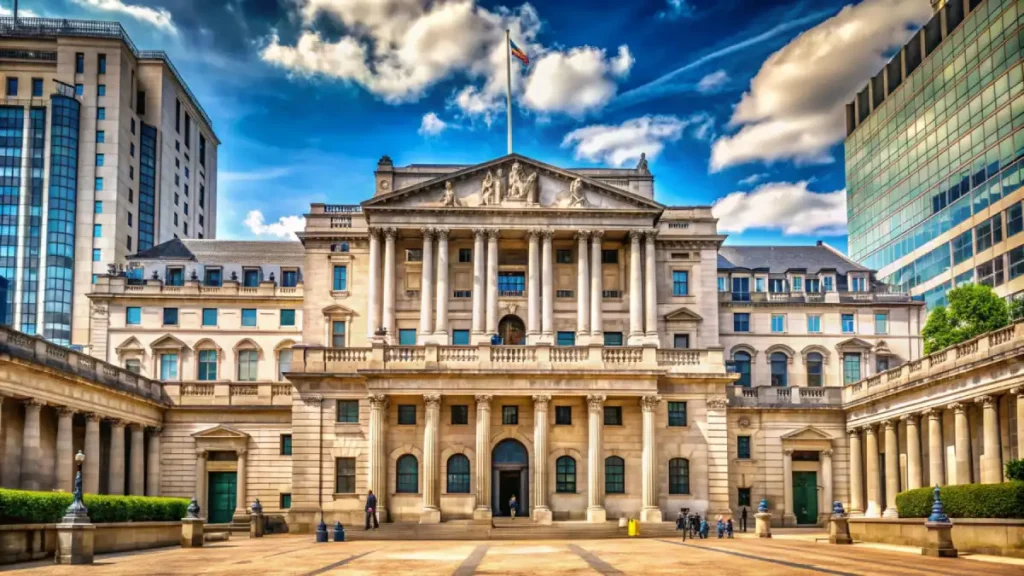

The contemporary global economy is undergoing a structural transformation unlike anything witnessed in recent decades. As financial institutions and multinational corporations adapt, navigating a turbulent financial landscape has become the primary challenge for corporate boardrooms worldwide. This widespread market instability is heavily exacerbated by widening geoeconomic fragmentation, a phenomenon where national security priorities and regional alliances systematically override traditional free-trade principles. For active market participants, understanding how these fragmented trade blocs and shifting financial networks interact is critical to preserving capital and identifying emerging growth corridors.
Deconstructing the Turbulent Financial Landscape
The current turbulent financial landscape is characterized by persistent macroeconomic crosswinds that defy conventional cyclical forecasting models. Central banks across major economies are forced to maintain restrictive monetary stances longer than initially anticipated due to structural supply shocks and resilient wage growth. This permanent shift toward higher-for-longer interest rates has dramatically increased debt-servicing costs for both corporate entities and sovereign issuers, creating an environment ripe for sudden liquidity squeezes and periodic market volatility.
Moreover, this turbulent financial landscape is further complicated by unprecedented capital reallocation trends. Traditional institutional investors are actively moving away from broad index funds, choosing instead to focus heavily on bespoke, country-specific assets that offer localized protection. As cross-border financial liquidity tightens, the premium placed on corporate resilience and balance sheet health has reached historic highs, leaving highly leveraged sectors incredibly vulnerable to unexpected macroeconomic adjustments.
The Structural Mechanics of Geoeconomic Fragmentation
At the core of these structural market shifts lies the accelerating process of geoeconomic fragmentation. What initially began as targeted trade tariffs between major superpowers has rapidly evolved into a systemic unraveling of global supply chains. Governments are increasingly deploying economic statecraft—including strict export controls, aggressive localized subsidies, and comprehensive investment screening mechanisms—to achieve national self-reliance and protect vital domestic infrastructure from foreign interference.
This deep-seated geoeconomic fragmentation is effectively dividing the world into distinct, competing trading blocs. This polarization goes far beyond simple manufacturing logistics; it directly encompasses digital data standards, cross-border payment rails, and critical mineral supply chains. Consequently, multinational enterprises can no longer rely on singular global operational models, forcing them to establish expensive, parallel corporate systems to remain compliant across diametrically opposed legal jurisdictions.
When Market Instability Meets Bloc-Based Politics
The direct intersection of a turbulent financial landscape and systematic geoeconomic fragmentation creates a compounding risk multiplier for global asset allocation. When international political tensions escalate, the resulting economic sanctions instantly disrupt established commodity flows, causing immediate, localized inflation spikes. These sudden supply-driven price increases make it exceedingly difficult for central banks to stabilize domestic monetary policy, as traditional interest rate hikes do little to resolve physical shipping bottlenecks or geopolitical port closures.
This complex dynamic ensures that geoeconomic fragmentation serves as a permanent, structural driver of overall market volatility. As the seamless flow of international capital faces mounting regulatory hurdles, corporate profit margins are inevitably squeezed by the dual pressures of rising compliance costs and duplicated supply chains. Savvy portfolio managers must therefore look past superficial corporate earnings reports, focusing deeply on a firm’s geographic footprint and structural vulnerability to sudden trade realignments.
Strategic Corporate Responses to Global Ruptures
To survive and thrive within this turbulent financial landscape, leading global corporations are completely rewriting their operational playbooks. The historical emphasis on absolute cost optimization and just-in-time logistics is being rapidly replaced by defensive strategies centered on operational resilience and near-shoring. Businesses are actively sacrificing short-term profit efficiency to build redundant supply chains within geographically friendly political alliances, a process frequently referred to as friend-shoring.
Additionally, overcoming the challenges of geoeconomic fragmentation requires aggressive investments in localized technological capabilities. Forward-thinking companies are heavily utilizing artificial intelligence and advanced automation to offset the higher labor costs associated with bringing manufacturing facilities back to domestic soil. By digitizing their operational workflows, these adaptable organizations can pivot their production schedules rapidly in response to sudden, unexpected shifts in international trade regulations.
Emerging Markets Caught in the Macroeconomic Crossfire
The combined pressure of a turbulent financial landscape and accelerating geoeconomic fragmentation is falling most heavily upon developing economies. As capital flees toward safe-haven currencies and domestic markets in times of high global uncertainty, emerging nations face severe capital flight and escalating debt burdens denominated in foreign currencies. Those countries lacking deep domestic capital reserves are finding it increasingly difficult to finance vital public infrastructure and sustainable development goals.
However, this systemic geoeconomic fragmentation also creates unique arbitrage opportunities for an agile group of middle-power nations. Countries that maintain strict diplomatic neutrality are successfully positioning themselves as vital economic bridges between competing global trading blocs. By serving as neutral logistics hubs and processing centers, these opportunistic economies are attracting massive inflows of foreign direct investment from multinational corporations desperate to diversify their regulatory risks.
The Future of Global Capital and Liquidity Flows
Looking toward the horizon, the structural architecture of international finance will continue to mirror geopolitical divisions. We are likely to see the steady proliferation of alternative, regional cross-border payment networks designed specifically to operate independently of western-dominated financial institutions. This evolution will fundamentally alter how global liquidity is distributed, potentially leading to a more multipolar currency framework over the next decade.
Ultimately, navigating this turbulent financial landscape successfully demands a profound shift in investor mindset. The historical baseline of seamless, hyper-globalized trade is no longer a viable foundation for long-term financial planning. Financial success in this highly fragmented era will belong entirely to those who can accurately anticipate geopolitical shifts and dynamically align their investment portfolios with the new realities of localized economic security.
Conclusion
In summary, the dual forces of a turbulent financial landscape and widening geoeconomic fragmentation are fundamentally reshaping the rules of international commerce. As structural trade barriers rise and capital flows become increasingly regionalized, traditional investment strategies must adapt to prioritize operational security over pure cost efficiency. Stay informed with global analysis from Wealthcrest Insights to effectively protect your portfolio against these systemic shifts. Contact our senior advisory team today to construct a highly resilient, globally diversified asset allocation strategy tailored for this fragmented era.
Frequently Asked Questions
What exactly is causing the current turbulent financial landscape?
The turbulent financial landscape is primarily driven by the long-term structural shift toward higher interest rates, persistent supply-side inflation shocks, and the massive fiscal burdens carried by major global economies as they fund domestic industrial transitions.
How does geoeconomic fragmentation impact regular retail investors?
Systemic geoeconomic fragmentation increases the overall volatility of global equity markets and drives up consumer prices by introducing structural inefficiencies into supply chains, making localized asset diversification absolutely vital for retail portfolios.
What industries are most vulnerable to geoeconomic fragmentation?
Industries heavily reliant on complex, cross-border supply chains—such as advanced semiconductor manufacturing, automotive production, renewable energy technology, and pharmaceutical development—are the most directly exposed to the rising costs of geoeconomic fragmentation.
Can a turbulent financial landscape lead to a global recession?
While a prolonged turbulent financial landscape significantly increases systemic risks and dampens global growth projections, a full-scale synchronized global recession can be avoided if regional economic corridors and tech-driven productivity gains remain resilient.
How can multinational corporations protect themselves against geoeconomic fragmentation?
Corporations can mitigate the negative impacts of geoeconomic fragmentation by diversifying their manufacturing footprint across multiple political alliances, building larger localized inventories, and investing in advanced automation to localize production efficiently.