
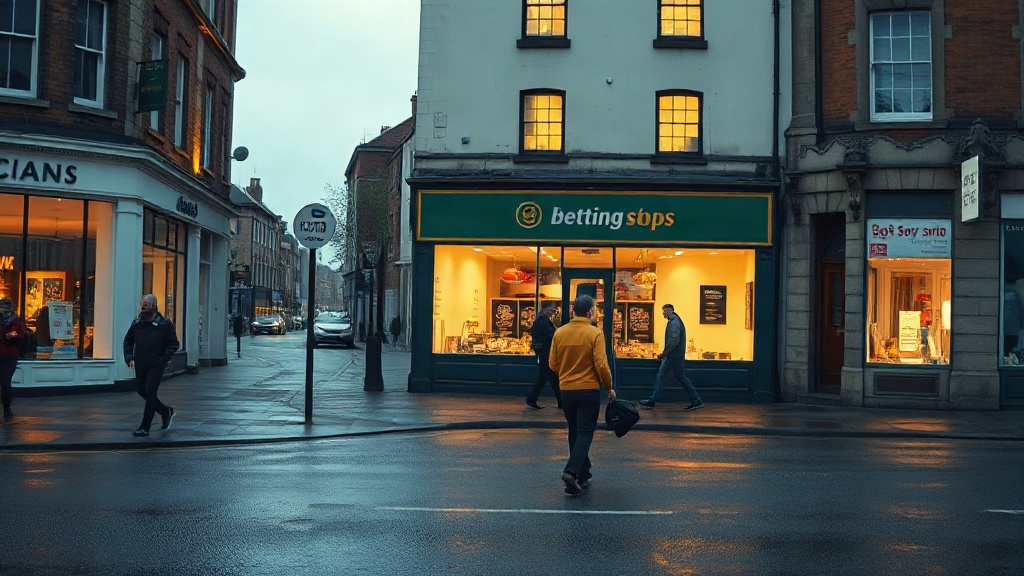
When the chancellor's first budget looms, Whitehall's most reliable ritual returns: an industry warns that a tax rise will destroy jobs, and a thinktank insists it will barely make a dent. This time the fight is over high-street slot machines, and the numbers being thrown around are unusually large.
According to reports, John Healey is considering doubling machine games duty (MGD) from 20% to 40%. The Social Market Foundation, which has been the loudest voice calling for the increase, estimates it could raise between £275m and £460m a year on top of the roughly £610m already collected. The betting industry, unsurprisingly, is urging him not to do it. Its central argument is that the tax would force bookmakers to close shops and shed staff. That claim deserves a closer look, because it is partly true, partly exaggerated, and largely beside the point.
What exactly is machine games duty?
Machine games duty is the tax charged on the profits from gaming machines in betting shops, casinos, bingo halls and similar venues. It applies to what the industry calls B2 machines, the fixed-odds betting terminals that were reclassified as B3 machines after the government cut the maximum stake from £100 to £2 in 2019. The duty is levied on the net takings from those machines, not on the stake itself, which is why the headline rate can look high without necessarily being crippling.
The current rate is 20%. Doubling it to 40% would make the UK one of the more heavily taxed markets for machine gaming in Europe, though not the most heavily taxed. France, for example, applies a range of levies that can exceed that level when social contributions are included. So the comparison depends entirely on which country you pick and which charges you count.
Why the industry says shops will close
The Association of British Bookmakers and individual operators such as Entain and Flutter have long argued that betting shops are already under pressure. Since the stake cut, thousands of shops have closed. The industry says machine income has fallen sharply, and that many shops now run at a loss. If the tax doubles, the argument goes, the marginal shops will go under, taking jobs with them.
That is not an empty threat. Betting shops employ people directly, often in areas where other retail jobs are scarce. A shop that closes takes with it a handful of full-time and part-time roles, plus the footfall that supports nearby businesses. In a weak economy, that matters.
But there is a catch in the industry's own numbers. The shops that have closed since 2019 were not closed because of tax. They were closed because the stake cut removed a large chunk of machine revenue overnight. The tax rise being discussed now would apply to a smaller base, so the absolute cash impact per shop is smaller than the headline rate suggests. That does not make it painless, but it does mean the claim that doubling MGD would trigger a fresh wave of closures is not automatically true.
The thinktank's counter-argument
The Social Market Foundation has argued that machine gaming is a relatively inelastic product. People who use the machines tend to keep using them even when the price of doing so rises. That means a higher tax rate can raise substantial revenue without destroying the activity itself. The foundation's estimates of £275m to £460m are based on that assumption, and they are not wild guesses. They are in line with what similar tax increases have raised in other jurisdictions.
The foundation also points out that the money could be used for treatment and prevention of gambling harm, which is a growing cost to the public purse. That framing turns the debate from a simple tax-versus-jobs fight into a question of who pays for the damage.
There is a real disagreement here about elasticity, and both sides have some evidence. The industry says demand is more fragile than it looks; the foundation says the opposite. The truth is probably somewhere in between, and it depends on the type of machine, the location, and the customer base.
What a tax rise would actually change
If the chancellor goes ahead, the effects would not be uniform. A few things are worth keeping in mind.
- Large operators would absorb more than small ones. Entain and Flutter have diversified revenue from online gaming and international markets. A tax rise on UK machines would hurt, but it would not be existential. Smaller independent operators with a handful of shops would feel it much more acutely.
- Shops in deprived areas are more exposed. Machine income is concentrated in areas with fewer alternative leisure options. Those are also the areas where a shop closure has the biggest relative impact on local employment.
- Online gambling would not be directly affected by MGD. The duty applies to physical machines, not to online slots. That creates an odd incentive: if the tax makes physical machines less profitable, operators may push customers toward digital products, which are subject to a different tax regime and have their own harm profile.
- The revenue could be lower than advertised. If the tax rise does cause some shops to close or reduce their machine numbers, the total collected will fall short of the static estimate. That is standard in tax policy, and it is why the real figure is likely to land somewhere below the top of the range.
The jobs question, honestly
Would a gambling tax rise cost jobs? Almost certainly some, at the margin. Would it shut shops? Some, probably. But the scale matters. The UK betting shop estate has already shrunk dramatically over the past decade, and the closures that followed the stake cut were driven by regulation, not tax. A duty increase would accelerate a trend that is already underway rather than start a new one.
The more interesting question is whether the jobs argument should settle the policy debate. If the government accepted that any tax that costs any job is unacceptable, it would never raise taxes on anything. The real test is whether the revenue raised is worth the disruption, and whether the harm being taxed is worth reducing. On both counts, the case for an increase is stronger than the industry likes to admit.
What to watch in the budget
Three details will determine the real-world impact. First, whether the rise is immediate or phased in. A gradual increase gives operators time to adjust, which reduces closures but also reduces the short-term revenue gain. Second, whether the government pairs the tax rise with any relief for affected workers or regions. So far, there is no sign of that. Third, whether the revenue is ring-fenced for gambling treatment or goes into the general pot. If it disappears into general spending, the public health argument for the tax becomes harder to sustain.
For now, the industry is doing what industries do: warning of catastrophe. The thinktank is doing what thinktanks do: pointing at the revenue. The chancellor has to decide which version of the future he believes. The evidence suggests the truth is less dramatic than either side claims, but it also suggests that the status quo is not neutral. Someone is paying for the costs of machine gambling, and right now it is not primarily the operators.
Frequently asked questions
Would doubling machine games duty really close betting shops?
It could close some marginal shops, especially small independent ones in areas with low footfall. But the larger operators have diversified income and would likely absorb the hit. The closures would be an acceleration of an existing trend, not a sudden collapse.
How much money would a tax rise raise?
The Social Market Foundation estimates between £275m and £460m a year, on top of the roughly £610m already collected. The actual figure would likely be lower if some shops close or reduce machine numbers.
Does the tax apply to online gambling?
No. Machine games duty applies to physical gaming machines in betting shops, casinos and bingo halls. Online gambling is taxed under a different regime, which means a rise in MGD could push operators to promote digital products instead.
Who supports the increase?
The Social Market Foundation is the most prominent advocate, arguing that the revenue could fund gambling harm treatment and prevention. Anti-gambling campaigners broadly support it. The betting industry opposes it.
What happens next?
The chancellor will set out his decision in the budget. The key details to watch are the pace of any increase, whether the revenue is ring-fenced, and whether any support is offered to affected workers.